
Photo via Pexels
Ambient Edge AI
Tiny AI processors embedded in everyday objects that process data locally without cloud connectivity. They enable real-time intelligence in sensors, appliances, and infrastructure.
Why It Matters
Processing AI at the edge eliminates latency, protects privacy, works offline, and scales to trillions of devices, making the built environment genuinely intelligent.
Development Stage
More Like This

Fault-Tolerant Quantum Computers
Quantum processors with enough error-corrected logical qubits to solve real-world problems. They use quantum superposition and entanglement to perform calculations impossible for classical machines.
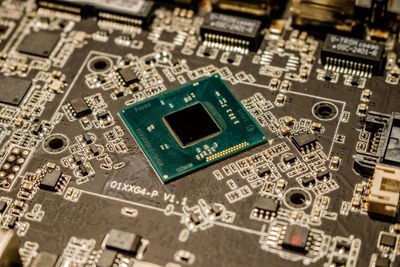
Neuromorphic Computing Chips
Processors architecturally modeled on the human brain, using artificial synapses and neurons that process information through spikes rather than binary logic, consuming 1000x less power than GPUs.

Artificial General Intelligence
AI systems with human-level reasoning that can learn any intellectual task, transfer knowledge between domains, and solve novel problems without task-specific training.

Humanoid General-Purpose Robots
Bipedal robots with dexterous hands and AI brains capable of performing arbitrary physical tasks in human environments, from warehouse work to elder care to construction.
Enjoyed this? Get five picks like this every morning.
Free daily newsletter — zero spam, unsubscribe anytime.