
Photo via Pexels
Scientists, led by a team from Lund University in Sweden, have unearthed compelling evidence of massive solar storms from millennia ago, preserved within Antarctic ice cores. By analyzing cosmogenic isotopes like Beryllium-10 and Carbon-14, researchers identified several 'superflare' events, including one approximately 9,200 years ago, that were up to 10-20 times more powerful than the largest solar storms recorded in modern history, such as the 1859 Carrington Event. These findings, published in 'Nature Communications,' offer a startling glimpse into the Sun's more violent past, indicating our star is capable of unleashing far more extreme energy bursts than previously thought. The implication is that our modern technological society is potentially vulnerable to events of a scale we have never directly experienced.
Editorial check
How this page is checked
Source trail
nature.com
External links are separated from Surfaced commentary.
Reader safety
Context before clicks
Product links and external services are not presented as guarantees.
Monetization
No affiliate flag
Ads and commerce links are kept distinct from editorial text.
Surfaced take
Why It’s Fascinating
Experts were surprised by the sheer magnitude and frequency of these ancient solar 'superflares,' which far exceed anything observed with contemporary instruments, challenging assumptions about the Sun's long-term stability. This discovery overturns the understanding that the solar maximums we've observed in the last few centuries represent the peak of the Sun's potential activity. In 5-10 years, this data will be crucial for improving space weather prediction models and hardening critical infrastructure, like power grids and satellite networks, against catastrophic electromagnetic pulses. It's like finding a cosmic time capsule that reveals our seemingly calm Sun has a hidden, explosive past. Space weather physicists, national security strategists, and infrastructure engineers will benefit most from this critical foresight. It forces us to ask: Are we adequately prepared for a solar event that could cripple global technology and communication for months or even years?
Related

Snippyly
Snippyly, developed by a team focused on real-time collaboration, is a browser-based tool for capturing screenshots, recording screen videos, and sharing code…
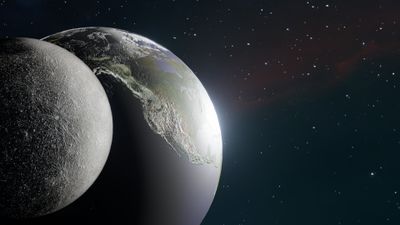
Lumara Space Dashboard
Lumara is an exquisitely designed, real-time interactive web dashboard developed by a passionate team focused on space visualization, bringing celestial…
Enjoyed this? Get five picks like this every morning.
Free daily newsletter — zero spam, unsubscribe anytime.