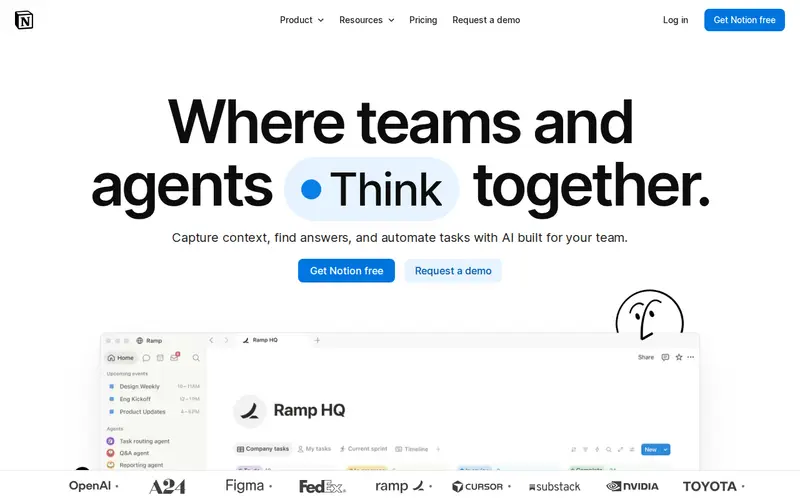
Notion is a highly flexible, all-in-one workspace that combines note-taking, task management, databases, and project collaboration into a single application. You can build custom workflows, organize information with pages and sub-pages, and use various blocks like checklists, tables, Kanban boards, and calendars. Notion operates on a freemium model, offering extensive capabilities for individuals and small teams, with paid tiers unlocking more features for larger organizations. It excels at creating interconnected systems for managing diverse information.
Editorial check
How this page is checked
Source trail
notion.so
External links are separated from Surfaced commentary.
Reader safety
Context before clicks
Product links and external services are not presented as guarantees.
Monetization
No affiliate flag
Ads and commerce links are kept distinct from editorial text.
Surfaced take
Why It’s Useful
Notion empowers users to create a personalized productivity system that adapts to their unique needs. Its versatility means it can replace multiple single-purpose apps, reducing clutter and improving focus. Teams can use it for project management, knowledge sharing, and CRM, while individuals can manage personal notes, goals, and to-do lists. The ability to link pages and databases creates a powerful web of information, making it easy to find what you need. Its extensive template gallery further accelerates setup, making it a go-to for anyone seeking a unified digital brain.
In everyday life
When you’d actually reach for this
You're planning a complex event and need to track guest lists, budgets, and schedules all in one place. You’re brainstorming new business ideas and want to organize research, notes, and potential action items logically. You’re managing personal finances and want to create a budget tracker linked to your savings goals.







Enjoyed this? Get five picks like this every morning.
Free daily newsletter — zero spam, unsubscribe anytime.