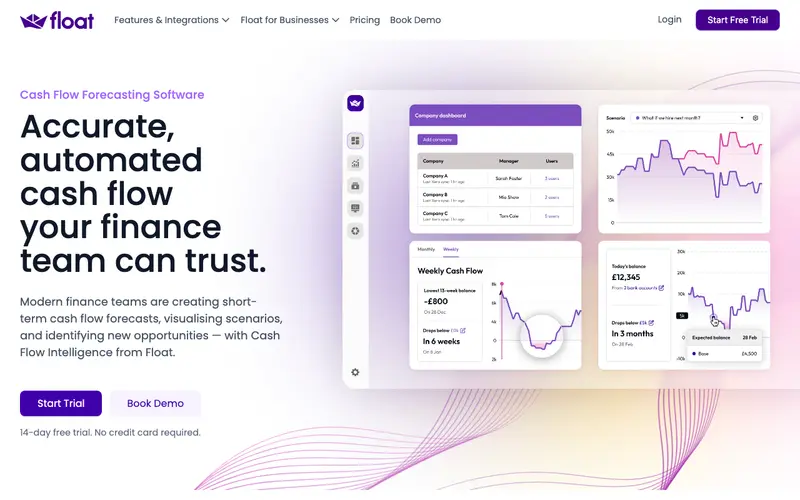
Float is a cloud-based cash flow forecasting software specifically designed for small and medium-sized businesses, created by Float. It integrates with accounting software like Xero, QuickBooks Online, and FreeAgent to pull financial data and project future cash flow with accuracy. The primary workflow involves connecting your accounting system, then using Float's intuitive interface to build, adjust, and analyze cash flow forecasts based on scheduled income and expenses. Float is a web-based platform. The most used feature is its scenario planning tool, allowing users to model different financial outcomes. All financial data is securely synced from connected accounting software and stored in Float's cloud infrastructure.
Editorial check
How this page is checked
Source trail
floatapp.com
External links are separated from Surfaced commentary.
Reader safety
Context before clicks
Product links and external services are not presented as guarantees.
Monetization
No affiliate flag
Ads and commerce links are kept distinct from editorial text.
Surfaced take
Why It’s Useful
Float eliminates the uncertainty and guesswork around future business finances, allowing businesses to proactively manage their cash flow and make strategic decisions with confidence. For a startup founder, Float provides a clear runway projection, helping them understand when they might need additional funding or adjust spending. For a small business owner planning a major investment, it models the impact on their cash reserves, ensuring they maintain liquidity. Float offers a 14-day free trial that is genuinely useful for evaluating its forecasting capabilities, with full functionality behind a paid subscription. Compared to complex spreadsheet models that are prone to errors and time-consuming, Float automates data import, offers robust visualization, and provides dynamic scenario planning. Its 'What if' scenarios, such as delaying a project or securing a new client, are powerful features for strategic financial planning. While connecting accounting software requires some familiarity, a non-technical business owner can typically generate their first forecast in under 30 minutes.





Enjoyed this? Get five picks like this every morning.
Free daily newsletter — zero spam, unsubscribe anytime.