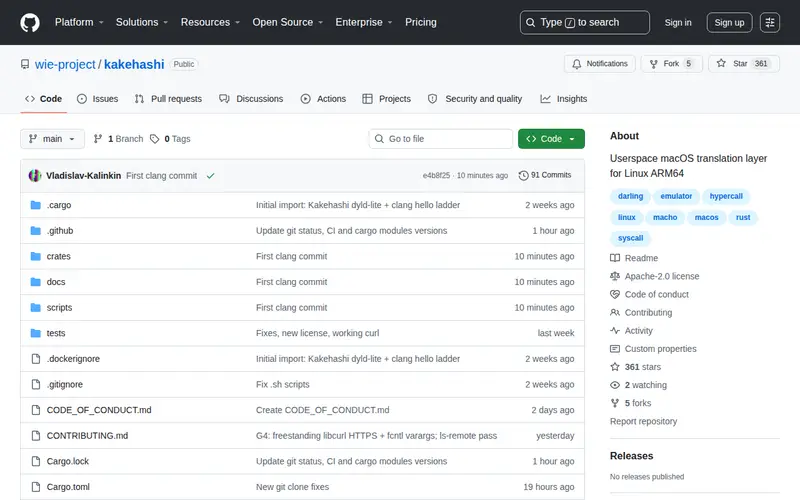
Kakehashi is an experimental userspace environment designed to enable the execution of macOS binaries on Linux ARM systems. Developed by the wie-project, it aims to bridge the gap between different operating systems and hardware architectures. This tool is particularly relevant for developers or enthusiasts who need to test or run macOS-specific applications in an ARM Linux environment without requiring dedicated Apple hardware. Imagine needing to test a macOS-only development tool on your Raspberry Pi or a Linux-based ARM server; Kakehashi would be your go-to solution.
Editorial check
How this page is checked
Source trail
github.com
External links are separated from Surfaced commentary.
Reader safety
Context before clicks
Product links and external services are not presented as guarantees.
Monetization
No affiliate flag
Ads and commerce links are kept distinct from editorial text.
Surfaced take
Why It’s Useful
This tool is a fascinating answer to the niche problem of running macOS applications on non-Apple ARM hardware, a feat not easily accomplished through conventional means. While not a polished product for everyday users, Kakehashi offers a powerful glimpse into cross-platform compatibility efforts. For developers targeting both macOS and Linux ARM, or researchers exploring OS compatibility, it provides a unique sandbox. Its experimental nature means it's not for the faint of heart, but for those who require this specific functionality, it's an invaluable, albeit obscure, resource. Power users who appreciate deep system-level tinkering and unconventional solutions will find it particularly compelling.
In everyday life
When you’d actually reach for this
You might use Kakehashi to test a macOS app you're developing on your Linux ARM server before handing it off to a colleague. It could also be useful for running a specific macOS utility you need for personal projects while primarily using Linux.



Enjoyed this? Get five picks like this every morning.
Free daily newsletter — zero spam, unsubscribe anytime.