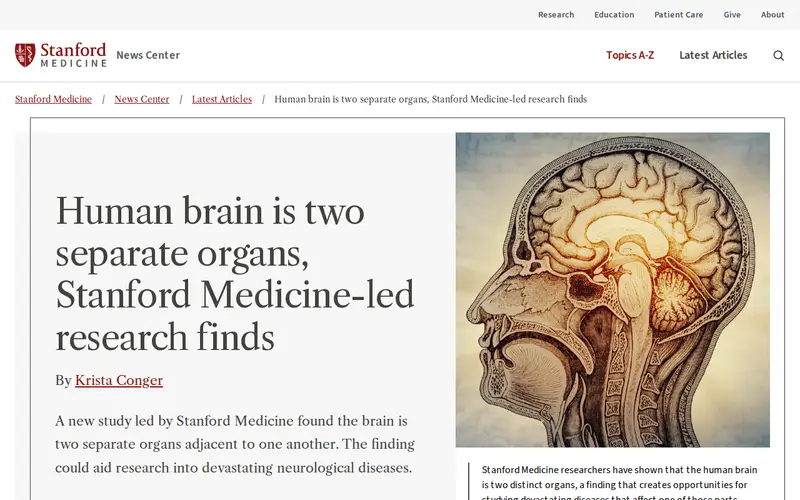
Research spearheaded by Stanford Medicine has uncovered novel insights suggesting the human brain may operate as two largely independent systems rather than a singular, integrated organ. This groundbreaking study meticulously details observed disparities in how the left and right hemispheres process information, learn, and communicate. The findings indicate a more profound degree of lateralization than previously theorized, potentially reshaping our fundamental understanding of brain architecture and its operational principles.
Editorial check
How this page is checked
Source trail
med.stanford.edu
External links are separated from Surfaced commentary.
Reader safety
Context before clicks
Product links and external services are not presented as guarantees.
Monetization
No affiliate flag
Ads and commerce links are kept distinct from editorial text.
Surfaced take
Why It’s Useful
This discovery represents a substantial departure from simplistic interpretations of brain function, such as the popularized left-brain/right-brain personality dichotomies. It offers a more precise and scientifically validated perspective on neurological organization. For professionals in neuroscience, medicine, and even those with a general interest in human cognition, this nuanced view can elucidate the varied presentations of neurological disorders and inform the development of more targeted therapeutic and rehabilitation approaches that account for hemispheric specialization. It serves as a valuable resource for gaining a deeper, evidence-based comprehension of how the human brain functions and is structured.
In everyday life
When you’d actually reach for this
You might encounter this information when reading about cognitive biases, learning about how different therapies work for stroke patients, or simply exploring fascinating facts about human biology.







Enjoyed this? Get five picks like this every morning.
Free daily newsletter — zero spam, unsubscribe anytime.