Photo via Pexels
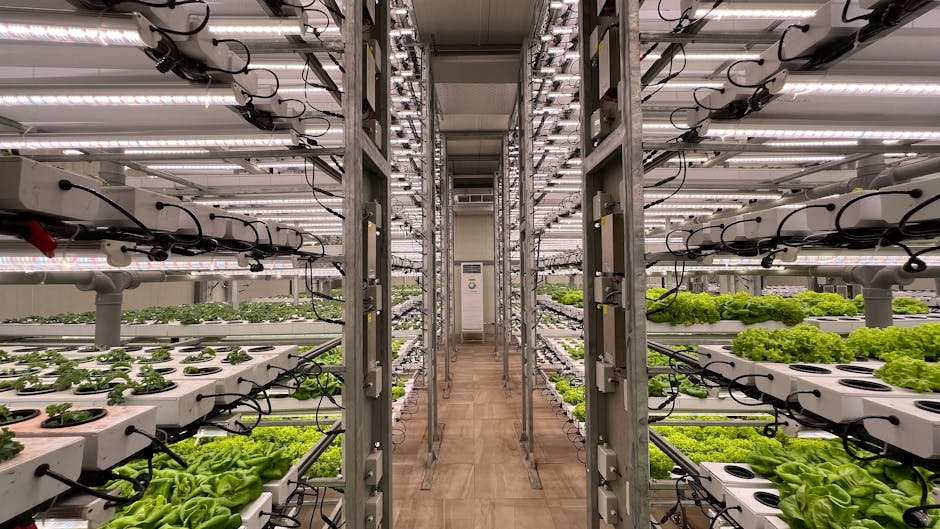
AI-Optimized Vertical Farms
Indoor farms stacking crops in climate-controlled layers, using AI to optimize light spectra, nutrients, and airflow. They use 95% less water and zero pesticides while producing year-round harvests.
Why It Matters
They decouple food production from weather, location, and season, enabling fresh produce in deserts, cities, and disaster zones while freeing farmland for rewilding.
Development Stage
More Like This
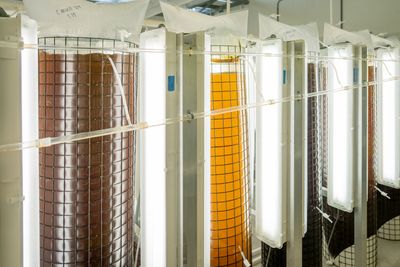
Precision Fermentation Proteins
Microorganisms engineered to produce animal-identical proteins, fats, and dairy without animals. Fermentation tanks convert sugar into real whey, collagen, casein, and egg whites at industrial scale.

CRISPR Crop Engineering
Gene editing applied to food crops to create varieties resistant to drought, disease, and pests without introducing foreign DNA. Edits are precise, fast, and increasingly accepted by regulators.

Autonomous Agricultural Drones
Swarms of AI-powered drones that monitor crop health with multispectral cameras, apply targeted micro-doses of fertilizer and pesticide, and pollinate plants in areas where bee populations have collapsed.
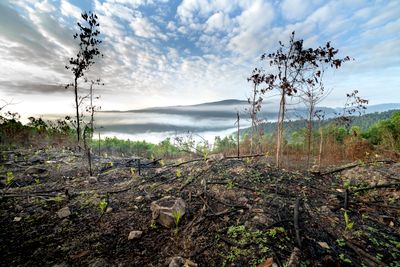
Biochar Soil Restoration
Charcoal produced from agricultural waste through pyrolysis, then added to degraded soil. It locks carbon underground for centuries while dramatically improving water retention, nutrient availability, and microbial health.
Enjoyed this? Get five picks like this every morning.
Free daily newsletter — zero spam, unsubscribe anytime.