Photo via Pexels
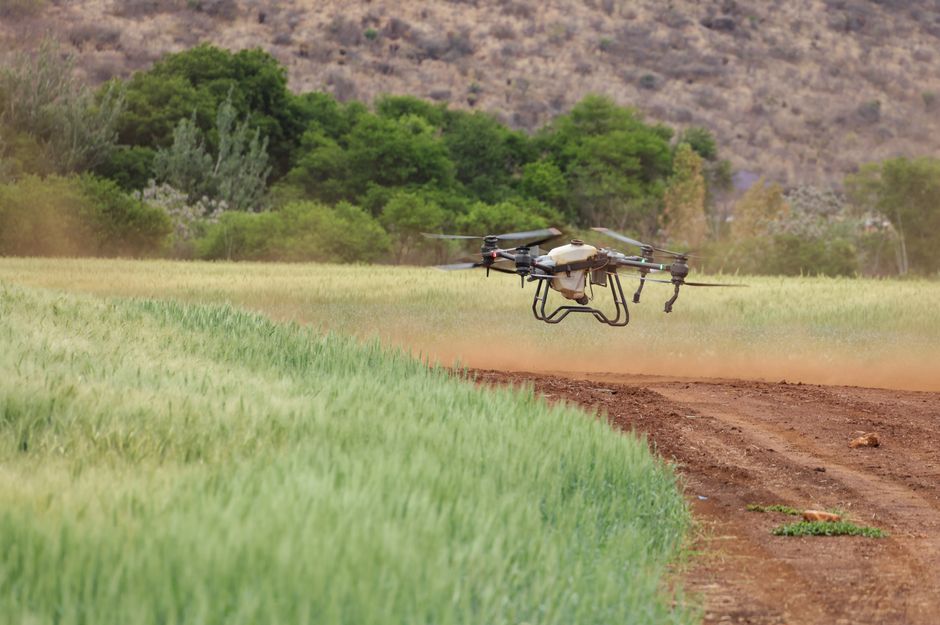
Autonomous Agricultural Drones are AI-powered unmanned aerial vehicles equipped with advanced sensors, including multispectral and hyperspectral cameras, that autonomously navigate and monitor agricultural fields. They collect high-resolution data on crop health, soil conditions, and pest infestations. This data informs highly precise, targeted interventions such as micro-dosing fertilizers or pesticides, and in advanced stages, robotic pollination. Major players include DJI Agriculture, XAG, and American Robotics. This technology is in commercial deployment for monitoring and spraying, with pollination still in R&D. DJI Agras series drones, for instance, are widely used, capable of spraying 10-15 acres per hour with centimeter-level precision, directly replacing labor-intensive manual scouting and broad-acre chemical application by tractors or manned aircraft.
Editorial check
How this page is checked
Source trail
arxiv.org
External links are separated from Surfaced commentary.
Reader safety
Context before clicks
Product links and external services are not presented as guarantees.
Monetization
No affiliate flag
Ads and commerce links are kept distinct from editorial text.
Surfaced take
Why It Matters
Rising global food demand coupled with labor shortages and inefficient resource use (water, fertilizer, pesticides) is a critical challenge. These drones can reduce pesticide use by up to 90%, water consumption by 30%, and detect disease outbreaks weeks earlier than human inspection, potentially saving 10-20% of crop yields. When mainstream, farmers will manage larger areas with greater efficiency and fewer chemical inputs, leading to more sustainable and potentially cheaper food for consumers. Drone manufacturers, AI agriculture software providers, and early-adopting farmers will be winners, while traditional agricultural machinery manufacturers and manual farm labor for certain tasks may face disruption. Key barriers include the initial investment cost, regulatory hurdles for autonomous flight beyond visual line of sight (BVLOS), data privacy concerns, and the need for robust rural connectivity. Widespread adoption for spraying and monitoring is expected in 3-7 years, with advanced autonomous tasks like pollination emerging in 7-15 years. China and the US are leading in manufacturing and software development, respectively. A second-order consequence is the potential for hyper-localized farming, even in challenging terrains, and the generation of a new layer of real-time agricultural data, which could transform commodity markets and agricultural insurance.
Development Stage
Related

The bottleneck might be the air in the room
This article delves into the often-overlooked impact of indoor air quality, specifically carbon dioxide (CO2) levels, on human cognitive function and…

TinyMed
TinyMed is a free, open-source, and privacy-focused application designed for tracking personal health metrics and symptoms in a minimalist, user-friendly…
Enjoyed this? Get five picks like this every morning.
Free daily newsletter — zero spam, unsubscribe anytime.