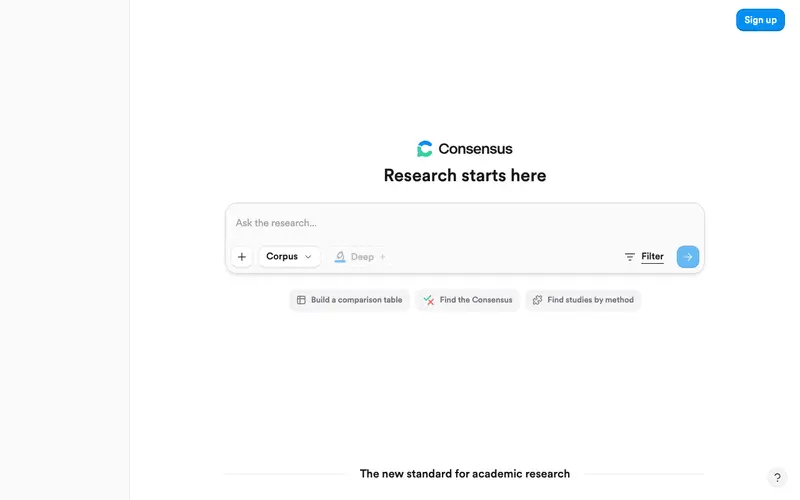
Consensus is an AI-powered search engine developed by a team focused on making scientific research accessible and actionable. Its core feature is the ability to directly extract and synthesize findings from academic papers, answering research questions with evidence-backed summaries rather than just linking to articles. It was built for academics, researchers, students, and anyone needing to quickly understand scientific consensus on a topic without sifting through countless PDFs. A user typically turns to Consensus when they have a specific scientific question (e.g., "Does creatine improve cognitive function?") and need direct, empirical answers. It operates as a web platform, accessible through any browser.
Editorial check
How this page is checked
Source trail
consensus.app
External links are separated from Surfaced commentary.
Reader safety
Context before clicks
Product links and external services are not presented as guarantees.
Monetization
No affiliate flag
Ads and commerce links are kept distinct from editorial text.
Surfaced take
Why It’s Useful
Unlike Google Scholar which provides a list of papers, Consensus actually reads and summarizes them for you, directly answering your questions with cited evidence. For the graduate student writing a literature review, it can save hundreds of hours by rapidly identifying key findings and relevant studies on a topic. For the medical professional staying current with research, it offers quick, evidence-based answers to clinical questions without deep dives into complex methodologies. A free tier allows a limited number of AI searches per month, with paid plans unlocking unlimited searches and advanced filtering. A powerful feature often overlooked is its "Synthesize" function, which compiles a summary of findings across multiple papers for a given query. Its niche focus on academic research limits its general popularity, but its utility for its target audience is unparalleled. It boasts a dedicated research community and continuous updates to its AI models and database.
In everyday life
When you’d actually reach for this
You're trying to settle a friendly debate about whether houseplants actually improve air quality before a weekend gardening trip. Or perhaps you need a quick, reliable answer about the effectiveness of different sleep aids for a friend who's struggling. You might also use it to get a concise summary of a complex topic you need to explain to your team before heading out on annual leave.






Enjoyed this? Get five picks like this every morning.
Free daily newsletter — zero spam, unsubscribe anytime.