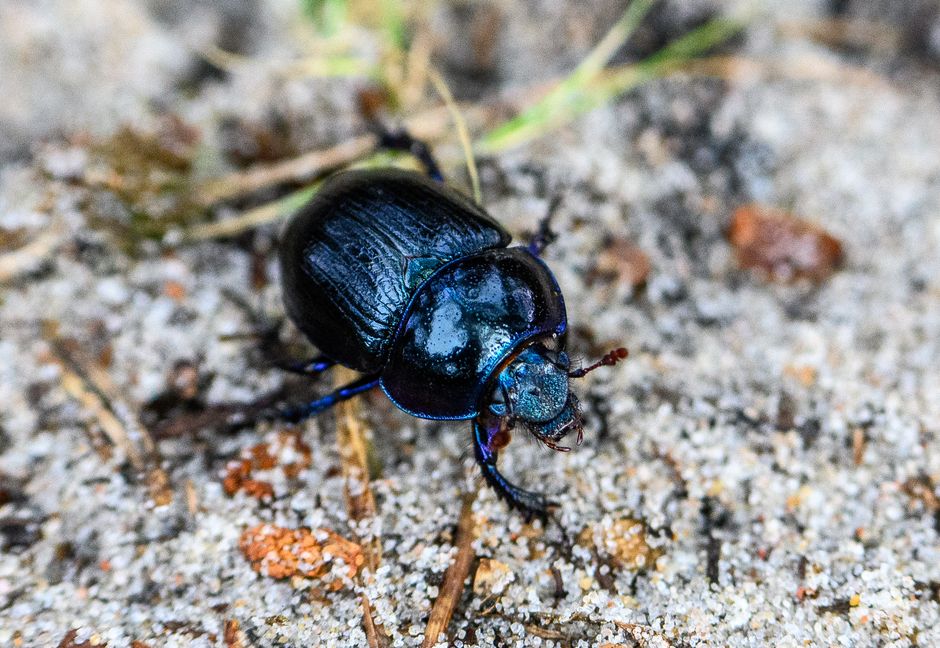
Photo via Pexels
Archaeological evidence from ancient Egypt, unearthed by a team led by Dr. David O'Connor of New York University, suggests that early Egyptian farmers actively cultivated and managed insect populations, particularly scarab beetles, for purposes beyond mere pest control. Findings published in *Antiquity* in February 2024 indicate these insects were likely harvested for their valuable dung, used as fertilizer, or even for their symbolic and ritualistic significance. This challenges previous assumptions about the exclusive focus on plant and animal agriculture in ancient societies.
Why It’s Fascinating
This revelation fundamentally alters our perception of ancient agricultural practices, suggesting a more nuanced and sophisticated understanding of ecological relationships than previously attributed to early civilizations. The careful management of insect populations for specific resources, whether agricultural or symbolic, points to a deep, practical knowledge of their environment. It implies that ancient Egyptians saw value in every facet of their ecosystem, integrating insects into their economy and culture in ways we are only beginning to uncover. This could have profound implications for how we understand the development of agriculture globally, and how early humans interacted with and manipulated their environments. It also raises questions about what other forgotten forms of 'domestication' might exist in the archaeological record, hinting at a richer tapestry of human ingenuity.
More Like This

Secrets of Ancient Egyptian Bread Fermentation Unlocked
Scientists have successfully recreated ancient Egyptian sourdough bread using yeast strains isolated from pottery shards found at archaeological sites. This provides direct insight into their baking techniques.

Remarkable Roman Shipwreck Reveals Ancient Trade Secrets
A remarkably well-preserved Roman-era shipwreck has been discovered off the coast, containing intact amphorae and other cargo. The find offers an unprecedented look into the trade routes and goods of the ancient Mediterranean.
The Dancing Plague of 1518: A Mysterious Outbreak of Uncontrollable Dancing
In Strasbourg, a woman began dancing uncontrollably in the street, and within a month, hundreds joined her, dancing for days without rest. This strange phenomenon resulted in several deaths from exhaustion, heart attack, or stroke. Historians are still debating the exact causes, ranging from mass psychogenic illness to ergot poisoning.
The Year Without a Summer Caused Global Famine and Extreme Weather
In 1816, much of the Northern Hemisphere experienced abnormally cold temperatures, crop failures, and widespread famine. This dramatic climatic anomaly, often dubbed 'The Year Without a Summer,' was primarily caused by the massive eruption of Mount Tambora in Indonesia the previous year, which spewed enormous amounts of ash and aerosols into the atmosphere, blocking sunlight.
Explore Related
From Future Tech, Hidden Gem

Aero-Acoustic Crop Protection
This technology leverages precision sound waves and acoustic metamaterials to deter agricultural pests or encourage specific plant growth patterns. It operates by emitting frequencies tailored to disrupt pest communication or flight, or by stimulating cellular processes in plants.

Ithihāsas – a character explorer for Hindu epics
Ithihāsas is a web application designed to explore and understand the complex characters and relationships within Hindu epics like the Ramayana and Mahabharata. Built in a remarkably short time, it provides an interactive interface to navigate through characters, their lineage, key events, and connections. This tool is perfect for students, scholars, or anyone curious about the rich narratives and intricate character webs of these ancient texts.
You Might Also Like

Deep-Sea Vents Host Astonishing New Life Forms
Explore →
Antarctic Ice Reveals World's Oldest Volcanic Eruptions
Explore →
Ancient Bacteria Revived from Mediterranean Seabed
Explore →
Stars are Singing: Gravitational Waves Reveal Cosmic Symphony
Explore →
Arctic Permafrost Releases Ancient Viruses, Potent Threat
Explore →
Ancient Chinese Musical Instrument Reveals Complex Notation
Explore →
Deep-Sea Vents Host Astonishing New Life Forms
Explore →
Antarctic Ice Reveals World's Oldest Volcanic Eruptions
Explore →
Ancient Bacteria Revived from Mediterranean Seabed
Explore →
Stars are Singing: Gravitational Waves Reveal Cosmic Symphony
Explore →
Arctic Permafrost Releases Ancient Viruses, Potent Threat
Explore →
Ancient Chinese Musical Instrument Reveals Complex Notation
Explore →Enjoyed this? Get five picks like this every morning.
Free daily newsletter — zero spam, unsubscribe anytime.