Photo via Pexels
Stars are Singing: Gravitational Waves Reveal Cosmic Symphony
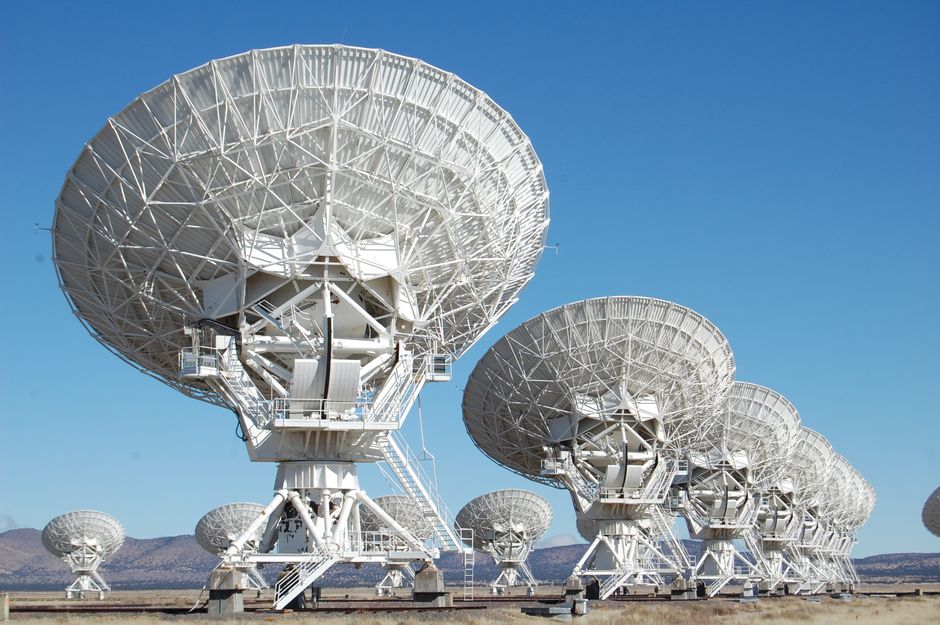
In a breakthrough published in *The Astrophysical Journal Letters* in January 2024, scientists from the North American Nanohertz Observatory for Gravitational Waves (NANOGrav) detected the pervasive hum of gravitational waves, originating from supermassive black hole mergers billions of light-years away. This 'gravitational wave background' is akin to eavesdropping on the universe's lowest musical notes, a symphony played by titanic cosmic objects. The discovery offers a new window into the evolution of galaxies and the dynamics of their central black holes, proving that even the most violent celestial events create a discernible, continuous chorus.
Why Itβs Fascinating
For decades, scientists have theorized about the existence of a stochastic gravitational wave background, the cumulative effect of countless gravitational wave sources too faint to detect individually. NANOGrav's unprecedented detection, achieved by meticulously timing an array of pulsars across our galaxy, provides the first concrete evidence of this cosmic hum. This discovery isn't just about detecting a new phenomenon; it's about opening a new observational band in astronomy, similar to how the discovery of radio waves or X-rays revolutionized our understanding of the universe. It allows us to probe the formation and evolution of supermassive black holes, which are central to galaxy formation, and offers insights into phenomena like cosmic inflation and the very early universe. The faint whisper detected by NANOGrav is a testament to the universe's grandest, most ancient processes. How might this new 'sound' of the universe change our models of cosmology, and what unseen cosmic choruses are still waiting to be heard?
More Like This
The Voyager Golden Record: Humanity's Message to the Cosmos
Launched with the Voyager 1 and 2 spacecraft in 1977, the Golden Records are phonograph records containing sounds and images selected to portray the diversity of life and culture on Earth. They are intended as a kind of time capsule and an interstellar message to any intelligent extraterrestrial life form that may encounter them. The contents include greetings in 55 languages, sounds of nature, music from different cultures, and 116 images.
Scientists Believe Diamonds Rain from the Skies on Certain Exoplanets
On gas giant planets like Neptune and Uranus, and potentially some exoplanets with similar compositions, extreme pressures and temperatures deep within their atmospheres are thought to transform hydrocarbons into solid diamonds. These diamonds then 'rain' down through the planet's interior.
WASP-12b: The Exoplanet Being Devoured by Its Star, Potentially Diamond-Rich
WASP-12b is an ultra-hot Jupiter exoplanet so close to its star that it's being stretched into an egg shape and slowly devoured. Its extreme carbon-rich composition and immense pressure suggest that a significant portion of its interior could be exotic carbon forms, potentially including diamond. This scorching hot gas giant offers a glimpse into extreme planetary conditions far beyond our solar system.
Oumuamua: The First Interstellar Object Detected Passing Through Our Solar System
In 2017, astronomers detected 'Oumuamua, the first confirmed object from another star system to pass through our solar system. Its unusual cigar-like shape, lack of a coma despite close solar passage, and non-gravitational acceleration sparked intense scientific curiosity. Its origin and composition remain a mystery.
Explore Related
From Future Tech, Product, Hidden Gem, Tool
Acoustic Metamaterial Sound Scaping
The deployment of specially engineered materials (metamaterials) designed to precisely control, direct, absorb, or reflect sound waves in specific environments. This allows for tailored acoustic zones, such as silent bubbles in noisy areas or enhanced sound in performance spaces.

Govee Glide Hexa Light Panels
Transform your living space with customizable, modular hexagon-shaped LED light panels. Sync them to music or design unique patterns to set any mood, all controlled effortlessly via a smart app.

Spacedrive
An open-source, cross-platform file manager that unifies files from local drives, cloud services, and network storage into one interface. It creates a virtual distributed filesystem across all your devices.
Readwise
Readwise is a powerful tool that syncs your highlights from various sources like Kindle, Pocket, and Instapaper, centralizing your learning. It then uses a spaced repetition system to resurface your best highlights daily, helping you retain information over time.
You Might Also Like

Ancient Farmers Cultivated Insects
Explore β
Deep-Sea Vents Host Astonishing New Life Forms
Explore β
Antarctic Ice Reveals World's Oldest Volcanic Eruptions
Explore β
Ancient Bacteria Revived from Mediterranean Seabed
Explore β
Arctic Permafrost Releases Ancient Viruses, Potent Threat
Explore β
Ancient Chinese Musical Instrument Reveals Complex Notation
Explore β
Ancient Farmers Cultivated Insects
Explore β
Deep-Sea Vents Host Astonishing New Life Forms
Explore β
Antarctic Ice Reveals World's Oldest Volcanic Eruptions
Explore β
Ancient Bacteria Revived from Mediterranean Seabed
Explore β
Arctic Permafrost Releases Ancient Viruses, Potent Threat
Explore β
Ancient Chinese Musical Instrument Reveals Complex Notation
Explore βEnjoyed this? Get five picks like this every morning.
Free daily newsletter β zero spam, unsubscribe anytime.