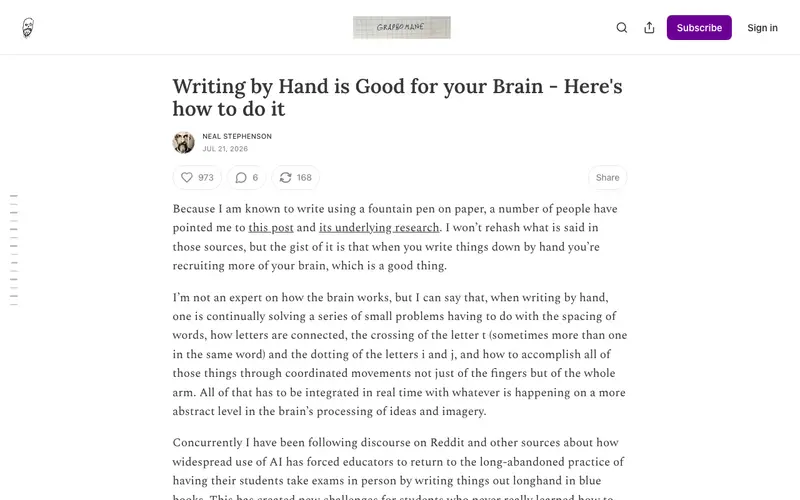
This article, originating from Neal Stephenson's Substack, delves into the scientific evidence supporting the cognitive benefits of handwriting. It explores how the physical act of writing by hand engages different neural pathways compared to typing, leading to enhanced memory retention, improved comprehension, and greater creativity. The piece meticulously details the neurological processes involved, citing research that suggests a more profound connection between mind and paper when writing manually. It's a thoughtful exploration for anyone seeking to understand the tangible advantages of analog note-taking in a digital age.
Editorial check
How this page is checked
Source trail
nealstephenson.substack.com
External links are separated from Surfaced commentary.
Reader safety
Context before clicks
Product links and external services are not presented as guarantees.
Monetization
No affiliate flag
Ads and commerce links are kept distinct from editorial text.
Surfaced take
Why It’s Useful
In an era dominated by keyboards and touchscreens, this piece is a compelling argument for a rediscovered practice. It's particularly useful for students, writers, or anyone looking to deepen their learning and retention. Unlike surface-level articles on productivity, this delves into the 'why' with scientific backing, explaining the neurological mechanisms at play. Power users of note-taking systems, or those experiencing digital fatigue, will find profound value in understanding how a simple shift in input method can unlock significant cognitive benefits. It highlights that sometimes, the most advanced tools are the oldest ones.
In everyday life
When you’d actually reach for this
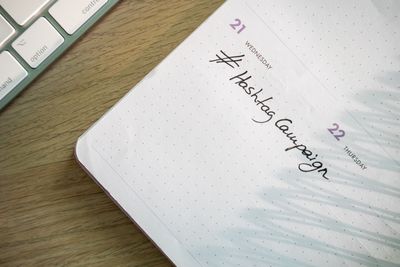
You might reach for this when planning your weekly budget or jotting down notes during a meeting. It's also helpful for summarizing articles you intend to read later or creating a to-do list for a group project.






Enjoyed this? Get five picks like this every morning.
Free daily newsletter — zero spam, unsubscribe anytime.