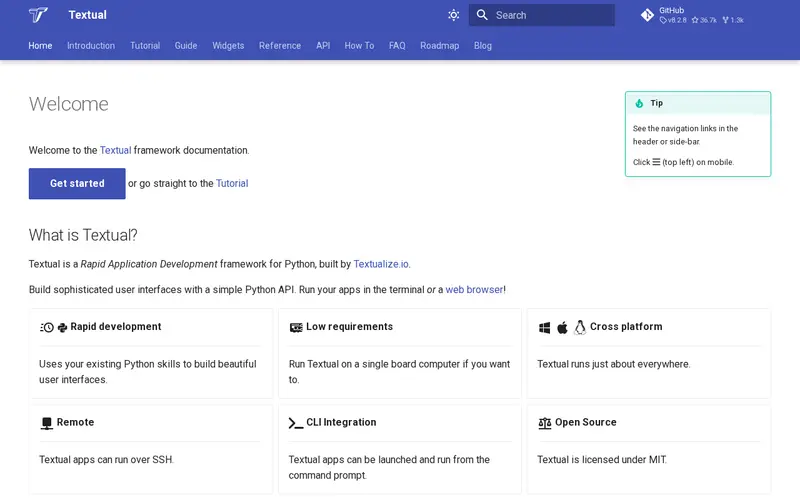
Textual is a modern Python framework for building sophisticated and visually rich command-line applications (TUIs). It allows developers to create interactive interfaces within the terminal, complete with widgets, layouts, and custom styling, moving beyond the limitations of basic text output. Textual is open-source and was created by Will McGugan, the developer behind Textualize.io. It's designed for building applications that are both powerful and user-friendly directly from the command line.
Editorial check
How this page is checked
Source trail
textual.textualize.io
External links are separated from Surfaced commentary.
Reader safety
Context before clicks
Product links and external services are not presented as guarantees.
Monetization
No affiliate flag
Ads and commerce links are kept distinct from editorial text.
Surfaced take
Why It’s Useful
While many developers are familiar with web frameworks or GUI toolkits, Textual offers a compelling way to build rich desktop-like applications entirely within the terminal. This is incredibly useful for developers who spend a lot of time in the CLI, need to create internal tools, or want to build cross-platform applications without relying on traditional GUI libraries. Its reactive design, comprehensive widget set, and CSS-like styling make it surprisingly powerful and enjoyable to use. It's an underrated tool for anyone who wants to elevate their command-line experience beyond simple scripts and build truly interactive terminal applications.
In everyday life
When you’d actually reach for this
Imagine you need to create a custom dashboard for monitoring your server logs or managing cloud resources directly from your terminal. Textual allows you to build a polished, interactive interface for this, making complex tasks more manageable on the go.




Enjoyed this? Get five picks like this every morning.
Free daily newsletter — zero spam, unsubscribe anytime.