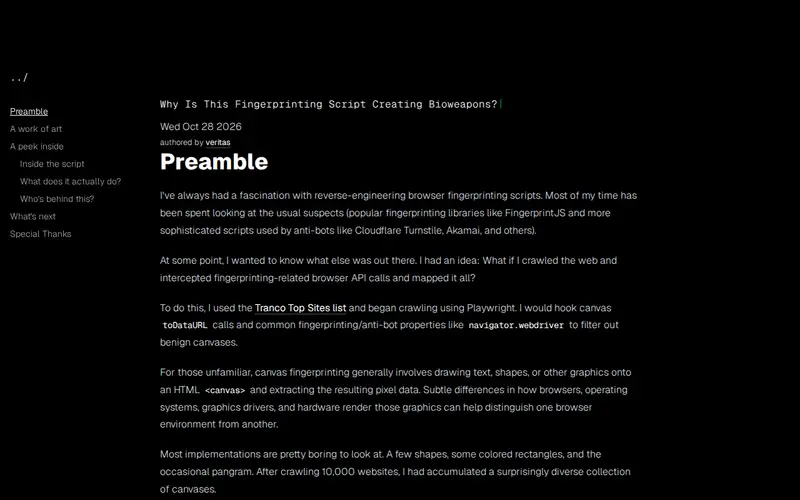
This article from nullpt.rs delves into a surprising and technical discovery: a seemingly innocuous website fingerprinting script was found to be generating code that resembles bioweapon specifications. The author meticulously analyzes the script's behavior and output, revealing how unusual code patterns could be interpreted as potentially harmful instructions. It's a deep dive into the unexpected outcomes of code generation and security analysis.
Editorial check
How this page is checked
Source trail
nullpt.rs
External links are separated from Surfaced commentary.
Reader safety
Context before clicks
Product links and external services are not presented as guarantees.
Monetization
No affiliate flag
Ads and commerce links are kept distinct from editorial text.
Surfaced take
Why It’s Useful
This piece is a gem for developers, cybersecurity enthusiasts, and anyone interested in the unexpected intricacies of code. It goes beyond typical security articles by illustrating a highly specific and bizarre technical failure or exploit. The depth of the analysis, the clarity with which complex code behavior is explained, and the sheer novelty of the 'bioweapon' connection make it exceptionally memorable. It highlights how even seemingly simple scripts can have complex or unintended consequences, and it appeals to those who love unraveling technical mysteries and exploring the fringes of digital security.
In everyday life
When you’d actually reach for this
You're a developer curious about obscure code vulnerabilities or how seemingly benign scripts might behave unexpectedly. You bookmark this article to read later during a dedicated research session.



Enjoyed this? Get five picks like this every morning.
Free daily newsletter — zero spam, unsubscribe anytime.