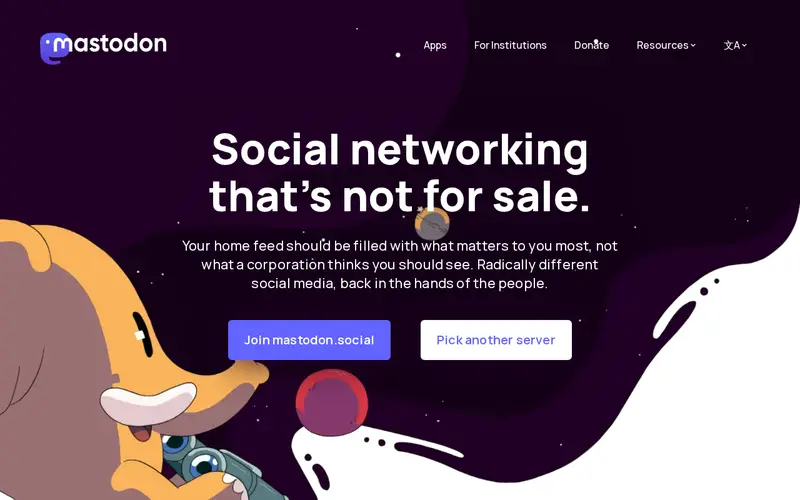
Mastodon is a free, open-source, decentralized social networking platform that operates on a network of independent servers, known as instances. Users can join existing instances or even host their own. It functions similarly to other microblogging platforms, allowing users to post short messages (toots), follow others, and engage in discussions. The key difference is its decentralized nature, which means no single entity controls the platform, fostering a more community-driven and ad-free experience. Mastodon prioritizes user privacy and control over their data and feed, avoiding algorithmic manipulation.
Editorial check
How this page is checked
Source trail
joinmastodon.org
External links are separated from Surfaced commentary.
Reader safety
Context before clicks
Product links and external services are not presented as guarantees.
Monetization
No affiliate flag
Ads and commerce links are kept distinct from editorial text.
Surfaced take
Why It’s Useful
Mastodon offers a refreshing alternative to centralized social media giants, providing users with greater control over their online experience. Its decentralized architecture means that the platform is not subject to the whims of a single corporation, leading to a more stable and user-focused environment. This is particularly appealing to those concerned about data privacy, algorithmic bias, and the monetization of personal information. The community-run nature of instances allows for niche social spaces to flourish, catering to specific interests and fostering more meaningful connections. For those seeking a less commercialized and more privacy-respecting social media experience, Mastodon is an excellent choice for engaging in online conversations and building communities.
In everyday life
When you’d actually reach for this
You want to share a funny observation from your morning commute with friends, or quickly find out what your book club is reading this month. You need to coordinate details for a surprise birthday party without relying on a single company's servers.







Enjoyed this? Get five picks like this every morning.
Free daily newsletter — zero spam, unsubscribe anytime.