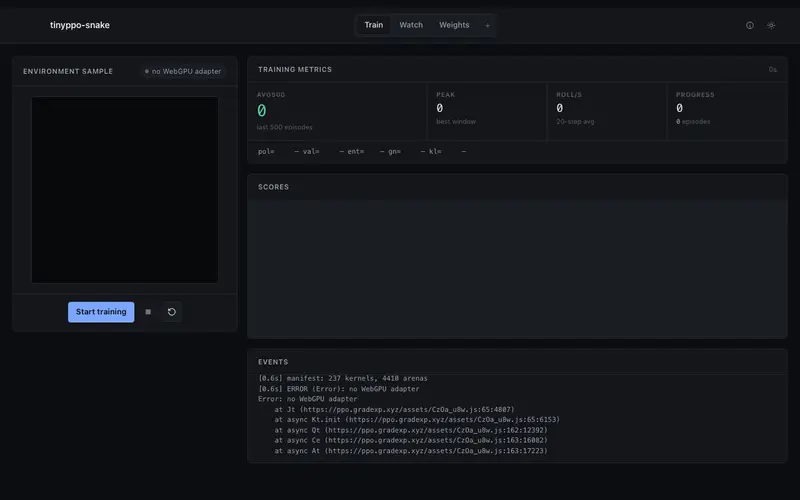
This interactive web tool, 'Watch a neural net learn to play Snake,' provides a fascinating visual demonstration of reinforcement learning in action. It allows users to observe a neural network progressively learn the game of Snake through trial and error. As the game progresses, users can see how the neural network's strategies evolve, from random movements to more sophisticated play, all within their web browser. The visualization typically includes elements showing the game state, the network's decision-making process (e.g., weights and biases), and performance metrics. It's a direct, engaging way to understand the fundamental principles of how AI learns complex tasks through experience.
Editorial check
How this page is checked
Source trail
ppo.gradexp.xyz
External links are separated from Surfaced commentary.
Reader safety
Context before clicks
Product links and external services are not presented as guarantees.
Monetization
No affiliate flag
Ads and commerce links are kept distinct from editorial text.
Surfaced take
Why It’s Useful
While many AI demonstrations exist, this tool is particularly effective because it makes an abstract concept like reinforcement learning highly tangible and engaging. Most people don't interact directly with AI learning processes, but this site lets you witness it firsthand in a familiar, simple game. The visual feedback loop is immediate and compelling, offering genuine insight into how algorithms adapt and improve. It's an excellent resource for students, hobbyists, or anyone curious about AI's learning capabilities, demystifying machine learning with a fun, interactive experience that far surpasses static diagrams or text explanations. It’s useful for grasping the core loop of learning through rewards and punishments.
In everyday life
When you’d actually reach for this
You have a few minutes free while waiting for a download to finish. You're curious about AI and want to see a simple, visual example of how it learns. You're procrastinating on a task and want a quick, engaging distraction that feels educational.






Enjoyed this? Get five picks like this every morning.
Free daily newsletter — zero spam, unsubscribe anytime.