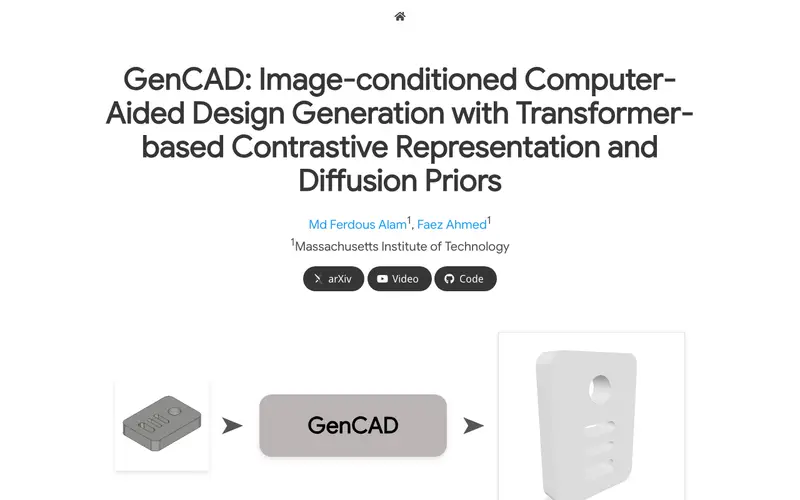
GenCAD is an open-source framework for generative design, enabling users to create complex CAD models through programmatic means. Built by GenCAD contributors, it allows for the exploration of design spaces by defining parameters and constraints, which the system then uses to generate a multitude of potential designs. This is particularly useful for engineers and designers looking to optimize parts for performance, material usage, or manufacturing processes.
Editorial check
How this page is checked
Source trail
gencad.github.io
External links are separated from Surfaced commentary.
Reader safety
Context before clicks
Product links and external services are not presented as guarantees.
Monetization
No affiliate flag
Ads and commerce links are kept distinct from editorial text.
Surfaced take
Why It’s Useful
While many mainstream CAD tools offer parametric design, GenCAD pushes the boundaries by embracing a truly generative approach. This means it's not just about modifying existing designs but about creating entirely new ones based on specified goals and rules. Engineers can use it to automatically generate lightweight yet structurally sound components for aerospace or automotive applications, or to discover novel forms that would be difficult to conceive manually. Its open-source nature fosters community contribution and adaptation, making it a flexible and powerful tool for those who need to iterate rapidly on design possibilities.
In everyday life
When you’d actually reach for this
You might use GenCAD when trying to find the most material-efficient bracket design for a standard shelf you're building. It's also helpful when you need to generate several variations of a custom furniture leg to fit different table heights for your workshop.







Enjoyed this? Get five picks like this every morning.
Free daily newsletter — zero spam, unsubscribe anytime.