Photo via Pexels
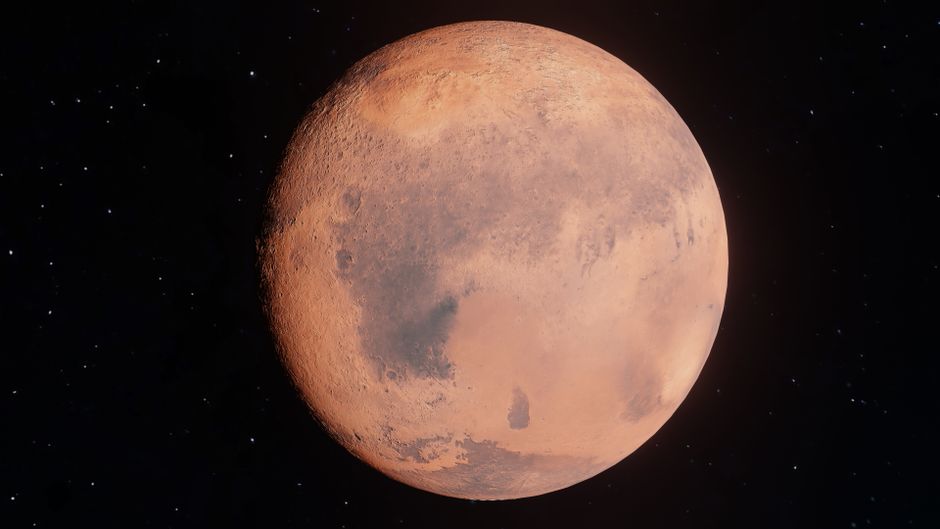
Olympus Mons, the largest volcano in the solar system, is so vast that Mars's curvature prevents an observer standing at its base from seeing its peak. Towering 21.9 kilometers high—nearly three times the height of Mount Everest—and spanning an incredible 600 kilometers across its base, its immense scale was first accurately measured by missions like Viking 1 Orbiter and Mars Global Surveyor. The average slope of Olympus Mons is so gentle, around 5 degrees, that an astronaut on its flank would perceive it as a slightly tilted plain rather than a mountain. This phenomenon is a direct consequence of the planet's diameter and the volcano's colossal dimensions, making its summit visually elusive.
Editorial check
How this page is checked
Source trail
science.nasa.gov
External links are separated from Surfaced commentary.
Reader safety
Context before clicks
Product links and external services are not presented as guarantees.
Monetization
No affiliate flag
Ads and commerce links are kept distinct from editorial text.
Surfaced take
Why It’s Fascinating
Planetary scientists were initially astounded by the sheer scale of Martian volcanoes, which far exceed Earth's largest, challenging our Earth-centric intuition about mountain visibility. This discovery overturns the common understanding that even the largest mountains are visibly grand from their base; on Mars, the planet's curvature dominates perspective. In 5-10 years, understanding the mechanics of such massive geological formations will inform future Martian colonization efforts, helping engineers design habitats or observatories on similarly vast features. Imagine standing on a dinner plate so enormous that you can't see the opposite edge because the plate itself curves away below your line of sight. Future Martian explorers, planetary geologists, and space architects benefit most from this understanding of extreme planetary topography. This raises a thought-provoking question: what other fundamental differences in planetary physics might drastically alter our perception of alien landscapes?
Related

WebGL Path Tracing
This project demonstrates real-time path tracing directly in the web browser using WebGL. It allows users to load simple 3D scenes and observe photorealistic…

Unlimited-OCR
Unlimited-OCR is a powerful Python-based open-source project that heralds a new era of 'one-shot long-horizon parsing' using AI. It enables highly efficient…
Enjoyed this? Get five picks like this every morning.
Free daily newsletter — zero spam, unsubscribe anytime.