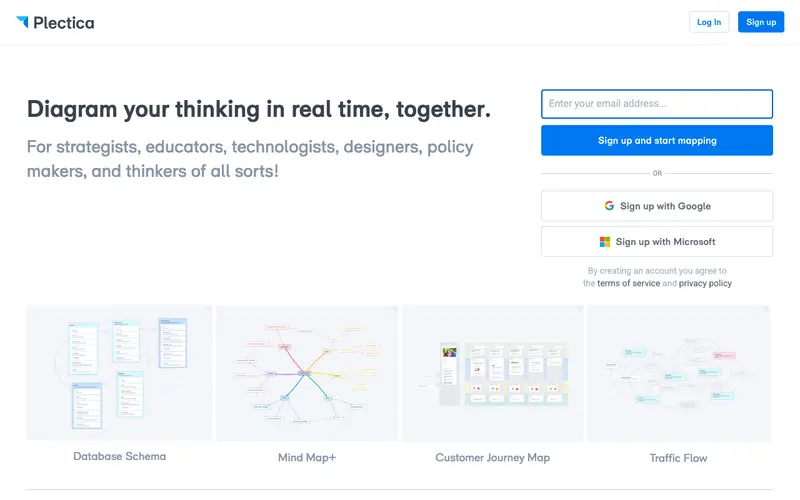
Plectica is a sophisticated web-based concept mapping and knowledge visualization tool developed by Plectica Inc. It allows users to build dynamic, interconnected visual models of complex ideas, arguments, and systems, going beyond traditional mind maps. The tool is primarily designed for academics, researchers, strategists, and anyone needing to organize and communicate intricate information clearly. Users typically open Plectica when they need to break down a complex problem, structure a research paper, or map out a strategic plan before presenting it. It offers integrations for embedding maps into Notion, Confluence, and other collaboration platforms via shareable links.
Editorial check
How this page is checked
Source trail
plectica.com
External links are separated from Surfaced commentary.
Reader safety
Context before clicks
Product links and external services are not presented as guarantees.
Monetization
No affiliate flag
Ads and commerce links are kept distinct from editorial text.
Surfaced take
Why It’s Useful
Plectica elevates concept mapping beyond tools like MindMeister or Miro by focusing on hierarchical, logical, and argumentative structures, making it better for deep analytical work. For the student tackling a philosophy essay, it provides a canvas to visually deconstruct arguments, identify logical fallacies, and rebuild a coherent thesis. A product manager might use it to map out a new feature's dependencies, user flows, and potential risks, ensuring no detail is overlooked before development. While the core mapping features are free for personal use with limited maps, paid plans unlock unlimited maps, advanced collaboration, and export options. Many users later discover its "Argument Mapping" feature, which formalizes logical connections and helps visualize the strength of evidence. Despite its powerful capabilities for structured thinking, its niche focus on rigorous knowledge organization means it hasn't caught on with the broader, more casual mind-mapping crowd. Plectica has an active blog with use cases and maintains a steady update schedule, though its community is more academic/professional than general.
In everyday life
When you’d actually reach for this
When you're trying to make sense of a confusing financial budget for your household, or when planning a complex group trip with multiple overlapping schedules. You might also use it to visually map out the responsibilities for a team member taking over your work before you go on leave.







Enjoyed this? Get five picks like this every morning.
Free daily newsletter — zero spam, unsubscribe anytime.