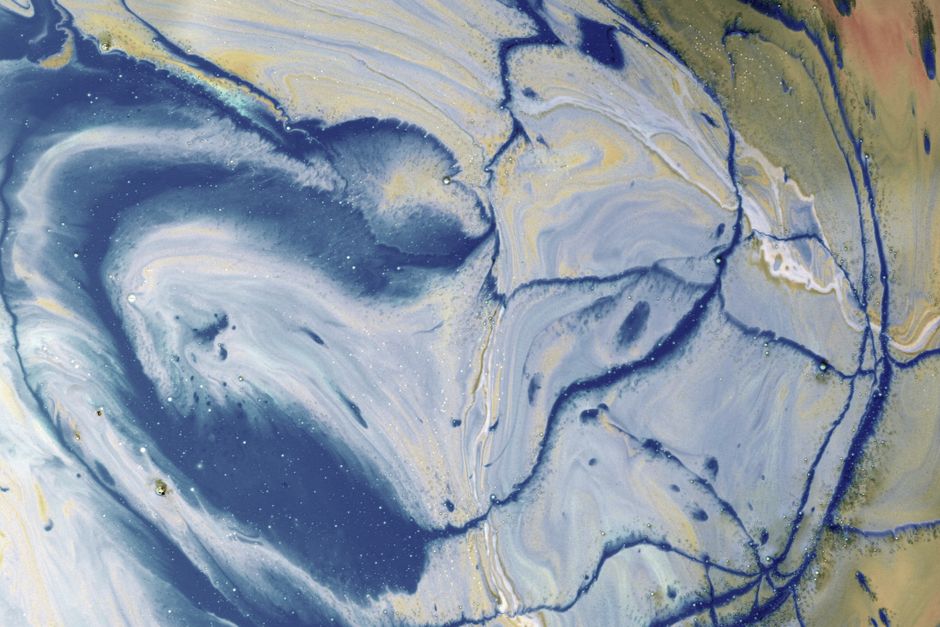
Photo via Pexels
A 2021 study published in 'Geophysical Research Letters' by a team led by Michael McManus at the University of Colorado Boulder proposed that early Venus might have possessed a substantial amount of water, potentially forming oceans for up to 3 billion years. Using advanced climate modeling, their simulations showed that Venus could have maintained liquid water on its surface during its early history, despite receiving more solar radiation than Earth. This finding reignites speculation about the potential for past habitability on our neighboring planet.
Why It’s Fascinating
Venus, now a hellish landscape of extreme heat and crushing atmospheric pressure, was once thought to be a potentially habitable world. This research, employing sophisticated climate models to simulate Venus's atmospheric evolution over billions of years, suggests that early Venus could have had a climate stable enough to support liquid water, a key ingredient for life as we know it. The simulations factored in the planet's rotation rate and the evolution of its atmosphere. While Venus likely had a runaway greenhouse effect due to its proximity to the sun, the models indicate that in its early stages, it might have experienced a period of temperate conditions akin to early Earth. This discovery is crucial because it expands the potential scope of where life could have arisen in our solar system and beyond. If Venus, a planet so drastically different from Earth today, could have once harbored oceans, it broadens the criteria for searching for exoplanetary life. It compels us to reconsider the diverse evolutionary paths planetary climates can take and the delicate balance required for habitability, posing the question: what subtle atmospheric or geological differences between early Earth and early Venus ultimately led to such divergent outcomes?
More Like This

The Voyager Golden Record: Humanity's Message to the Cosmos
Launched with the Voyager 1 and 2 spacecraft in 1977, the Golden Records are phonograph records containing sounds and images selected to portray the diversity of life and culture on Earth. They are intended as a kind of time capsule and an interstellar message to any intelligent extraterrestrial life form that may encounter them. The contents include greetings in 55 languages, sounds of nature, music from different cultures, and 116 images.

Scientists Believe Diamonds Rain from the Skies on Certain Exoplanets
On gas giant planets like Neptune and Uranus, and potentially some exoplanets with similar compositions, extreme pressures and temperatures deep within their atmospheres are thought to transform hydrocarbons into solid diamonds. These diamonds then 'rain' down through the planet's interior.

WASP-12b: The Exoplanet Being Devoured by Its Star, Potentially Diamond-Rich
WASP-12b is an ultra-hot Jupiter exoplanet so close to its star that it's being stretched into an egg shape and slowly devoured. Its extreme carbon-rich composition and immense pressure suggest that a significant portion of its interior could be exotic carbon forms, potentially including diamond. This scorching hot gas giant offers a glimpse into extreme planetary conditions far beyond our solar system.

Oumuamua: The First Interstellar Object Detected Passing Through Our Solar System
In 2017, astronomers detected 'Oumuamua, the first confirmed object from another star system to pass through our solar system. Its unusual cigar-like shape, lack of a coma despite close solar passage, and non-gravitational acceleration sparked intense scientific curiosity. Its origin and composition remain a mystery.
Explore Related
From Future Tech, Product, Hidden Gem, Tool

Marine Cloud Brightening
Ships that spray fine sea salt particles into low-lying clouds over the ocean, increasing their reflectivity. The brighter clouds bounce more sunlight back to space, cooling the regions below.
Govee Glide Hexa Light Panels
Transform your living space with customizable, modular hexagon-shaped LED light panels. Sync them to music or design unique patterns to set any mood, all controlled effortlessly via a smart app.

Readwise Reader
Readwise Reader is an all-in-one 'read-it-later' application designed to help you read and annotate articles, PDFs, and newsletters more effectively. It integrates seamlessly with Readwise for spaced repetition of your highlights.

Notion
All-in-one workspace for notes, docs, project management, and wikis — with AI-powered writing assistance and a modular block-based editor.
You Might Also Like
Ancient Roman Concrete Had Self-Healing Properties
Explore →
Synthetic Cells Demonstrate Biological Evolution in Lab
Explore →
Ancient Hominin Diet Revealed by Fossil Teeth
Explore →
Earth's Solid Inner Core Might Be Two Distinct Solid Layers
Explore →
Ancient Farmers Cultivated Insects
Explore →
Deep-Sea Vents Host Astonishing New Life Forms
Explore →Ancient Roman Concrete Had Self-Healing Properties
Explore →Synthetic Cells Demonstrate Biological Evolution in Lab
Explore →Ancient Hominin Diet Revealed by Fossil Teeth
Explore →Earth's Solid Inner Core Might Be Two Distinct Solid Layers
Explore →Ancient Farmers Cultivated Insects
Explore →Deep-Sea Vents Host Astonishing New Life Forms
Explore →Enjoyed this? Get five picks like this every morning.
Free daily newsletter — zero spam, unsubscribe anytime.