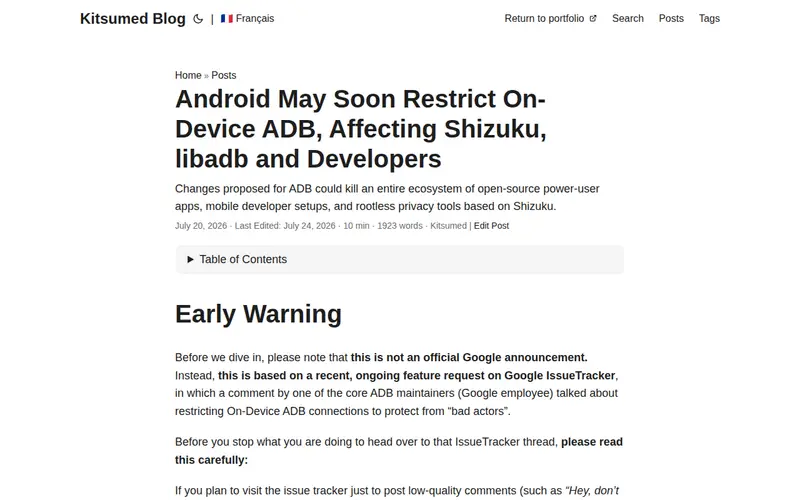
This blog post investigates a significant potential shift in Android's operating system: the restriction of on-device Android Debug Bridge (ADB) functionality. The author meticulously outlines the potential implications for a range of users, including Android developers, quality assurance testers, and advanced users who leverage ADB for critical tasks such as direct device debugging, sideloading applications, and comprehensive device management without requiring a separate computer. The post also examines the underlying technical motivations driving this proposed change and speculates on its broader impact across the Android development and user ecosystem.
Editorial check
How this page is checked
Source trail
kitsumed.github.io
External links are separated from Surfaced commentary.
Reader safety
Context before clicks
Product links and external services are not presented as guarantees.
Monetization
No affiliate flag
Ads and commerce links are kept distinct from editorial text.
Surfaced take
Why It’s Useful
This piece offers essential foresight for individuals deeply involved in Android development, custom ROM creation, or advanced device tinkering. It highlights a pivotal platform modification that could fundamentally alter developer-device interaction paradigms. By thoroughly explaining the rationale behind Google's potential move to restrict on-device ADB, the article empowers readers to anticipate and adapt their future workflows. It serves as an exemplary instance of how specialized technical blogs can surface crucial information, often ahead of mainstream tech reporting, providing a vital heads-up on evolving security postures and platform capabilities within the Android environment.
In everyday life
When you’d actually reach for this
You might use this if you're trying to access specific files on an old phone you no longer use. It could also be helpful when you need to transfer data from a broken device to a new one, bypassing typical software limitations.




Enjoyed this? Get five picks like this every morning.
Free daily newsletter — zero spam, unsubscribe anytime.