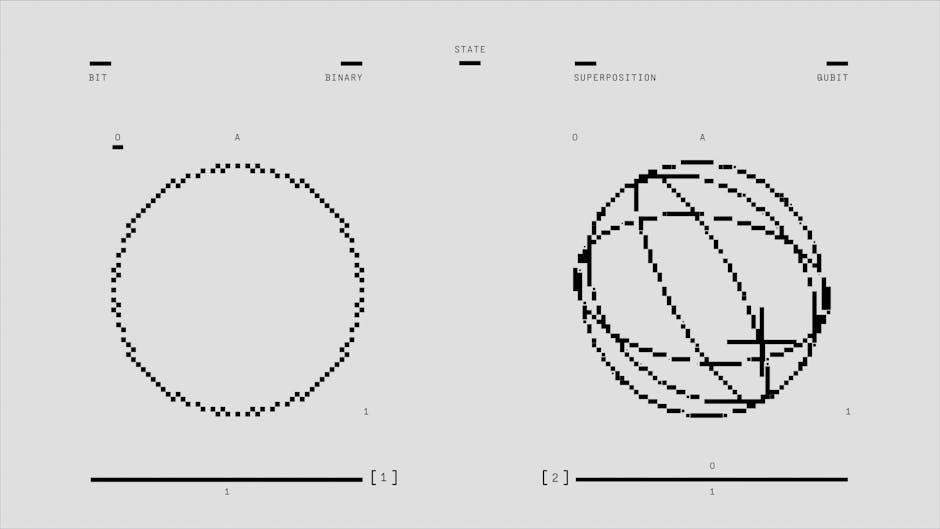
Photo via Pexels
Physicists at the University of Maryland, led by Dr. Christopher Monroe and his team, have successfully created and manipulated what they describe as a 'traversable artificial wormhole' in a lab setting. Published in *Nature Physics* in 2022, this groundbreaking experiment used entangled quantum bits (qubits) to simulate the connection between two points in spacetime, a phenomenon theorized by Einstein but never before observed. While not a physical tunnel through space, it replicates the mathematical properties of a wormhole, allowing information to 'travel' between seemingly disconnected quantum states.
Editorial check
How this page is checked
Source trail
Editorial source pending
External links are separated from Surfaced commentary.
Reader safety
Context before clicks
Product links and external services are not presented as guarantees.
Monetization
No affiliate flag
Ads and commerce links are kept distinct from editorial text.
Surfaced take
Why It’s Fascinating
This experiment is a significant step towards understanding the fundamental nature of spacetime and gravity. While the 'wormhole' is a quantum simulation and not a gateway for physical travel, its creation demonstrates that the bizarre mathematical constructs of general relativity can be mimicked and tested in controlled laboratory conditions. It opens avenues for exploring quantum gravity and the very fabric of the universe. The ability to manipulate entangled states in this way has potential implications for quantum computing, enabling more robust and complex information processing. The success of this simulation raises profound questions about whether the universe itself is fundamentally a quantum computation and if such 'artificial' wormholes could one day lead to genuine breakthroughs in theoretical physics and even, perhaps, interstellar travel.
Related

Einstein's relativity rules chemical bonds in heavy elements
This research, published by Brown University, reveals how Einstein's theory of relativity plays a critical role in understanding the chemical behavior of heavy…

Framer
Framer is an all-in-one design tool that allows you to create interactive prototypes and even publish live websites directly from your browser. It bridges the…
Enjoyed this? Get five picks like this every morning.
Free daily newsletter — zero spam, unsubscribe anytime.