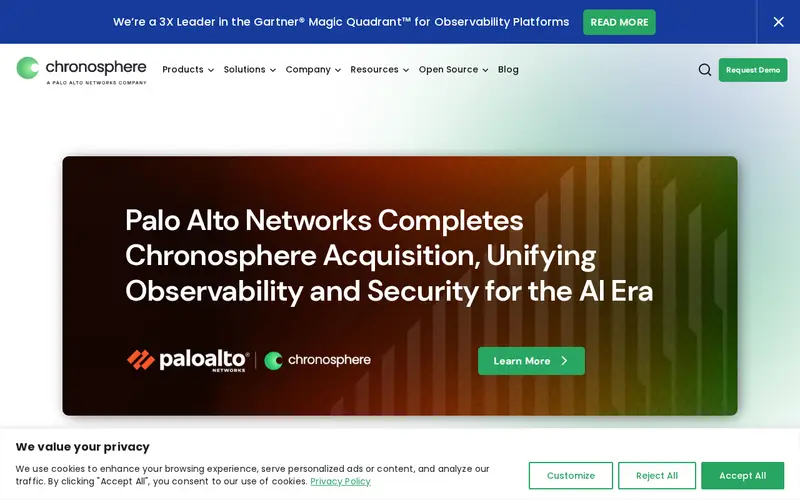
Chronosphere is a cloud-native observability platform designed for high-scale engineering teams. It provides a unified solution for metrics, traces, and logs, enabling engineers to understand the behavior of their complex distributed systems. Instead of dealing with multiple disparate tools, Chronosphere offers a single pane of glass to monitor, troubleshoot, and optimize application performance. It's built to handle massive data volumes efficiently, ensuring that you have the insights you need without being overwhelmed by noisy data.
Editorial check
How this page is checked
Source trail
chronosphere.io
External links are separated from Surfaced commentary.
Reader safety
Context before clicks
Product links and external services are not presented as guarantees.
Monetization
No affiliate flag
Ads and commerce links are kept distinct from editorial text.
Surfaced take
Why It’s Useful
Chronosphere is incredibly useful for companies with large, distributed microservice architectures where traditional observability tools struggle to scale. It tackles the common problem of observability data overload by offering intelligent data management and powerful querying capabilities. Teams can quickly pinpoint the root cause of issues by correlating different data types seamlessly, drastically reducing Mean Time To Resolution (MTTR). Unlike many open-source solutions that require significant operational overhead, Chronosphere is a managed service that abstracts away much of the complexity, allowing engineers to focus on building and shipping features rather than managing their observability stack. Its cost-effectiveness at scale, achieved through intelligent sampling and retention policies, is a major draw for organizations facing runaway observability costs.
In everyday life
When you’d actually reach for this
You're debugging a weird slowdown on your website just before a big product launch. Later, you're trying to figure out why your team's new feature isn't performing as expected.






Enjoyed this? Get five picks like this every morning.
Free daily newsletter — zero spam, unsubscribe anytime.