Photo via Pexels
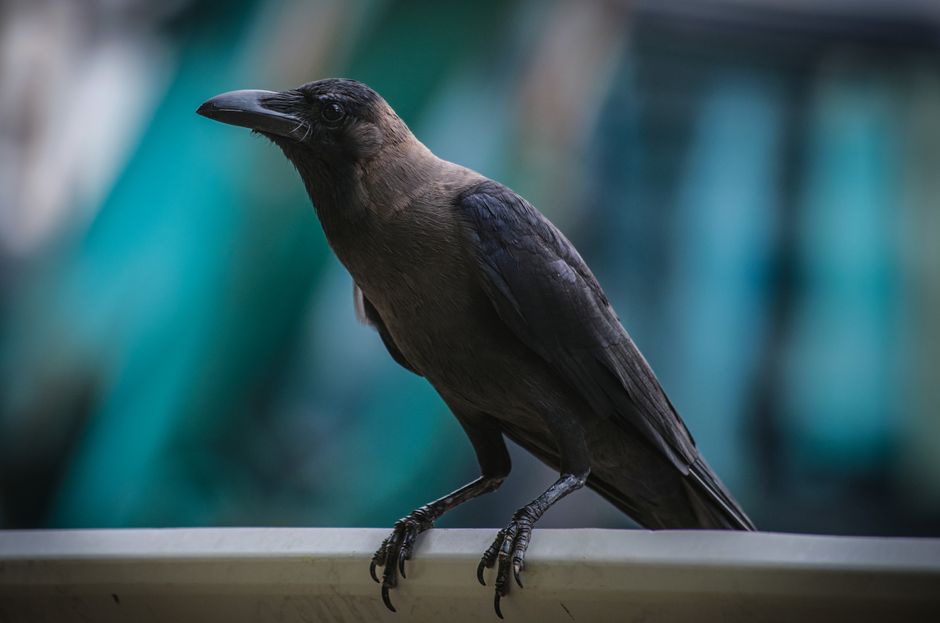
Researchers at the University of Washington, led by Dr. John Marzluff, demonstrated that American crows can recognize individual human faces and retain this memory for years. In a study published in 2008 in Animal Behaviour, crows recognized specific 'dangerous' human faces up to five years later, and this knowledge was culturally transmitted to other crows, including their offspring, even those who hadn't directly encountered the perceived threat. Scientists wore masks—one 'dangerous' associated with trapping, another neutral—observing that crows would scold and mob individuals wearing the 'dangerous' mask, even when worn by different people. This sophisticated social learning suggests crows possess a complex form of cultural transmission and a long-term memory for specific threats, extending beyond individual experience.
Editorial check
How this page is checked
Source trail
pmc.ncbi.nlm.nih.gov
External links are separated from Surfaced commentary.
Reader safety
Context before clicks
Product links and external services are not presented as guarantees.
Monetization
No affiliate flag
Ads and commerce links are kept distinct from editorial text.
Surfaced take
Why It’s Fascinating
Scientists were surprised by the specificity and longevity of the crows' facial recognition, as well as their ability to transmit this information culturally across generations without direct experience. It challenges the prior understanding that such complex social learning and memory, including the ability to identify individuals within another species, is exclusive to primates or highly social mammals. Understanding the neural mechanisms behind such specific, cross-species memory and cultural transmission could inform advancements in AI facial recognition systems or even help develop strategies for managing human-wildlife conflicts within 5-10 years. It's like a neighborhood watch program where a specific family's face is put on a 'wanted' poster, and even their grandchildren learn to recognize and scold that family, simply from community stories. Ethologists, cognitive scientists, and urban ecologists benefit by gaining deeper insights into avian intelligence and social structures. If crows can maintain generational grudges against specific humans, what other complex social behaviors might we be underestimating in common urban wildlife?
Related

Mastodon
Mastodon is a free, open-source, decentralized social networking platform that operates on a network of independent servers, known as instances. Users can join…

StreetComplete
StreetComplete is a mobile application designed to help users contribute to OpenStreetMap by completing small, everyday mapping tasks. It presents users with…
Enjoyed this? Get five picks like this every morning.
Free daily newsletter — zero spam, unsubscribe anytime.