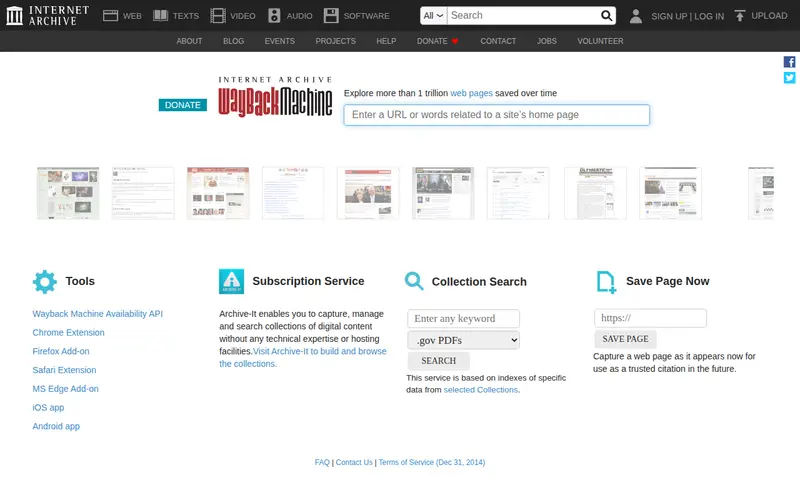
The Wayback Machine, operated by the Internet Archive, is a digital archive of the World Wide Web that allows users to revisit and explore past versions of websites. By crawling and archiving billions of web pages over time, it provides a unique historical record of the internet. Users can input a URL and see snapshots of that website from different dates, offering insights into how content has evolved, disappeared, or been preserved. This service is entirely free to use and is invaluable for historical research, recovering lost content, or understanding the development of online information.
Editorial check
How this page is checked
Source trail
archive.org
External links are separated from Surfaced commentary.
Reader safety
Context before clicks
Product links and external services are not presented as guarantees.
Monetization
No affiliate flag
Ads and commerce links are kept distinct from editorial text.
Surfaced take
Why It’s Useful
The Wayback Machine is an unparalleled tool for digital historians, researchers, journalists, and anyone curious about the internet's past. It allows you to recover information from websites that are no longer live, a common occurrence with evolving online content. Whether you need to verify an old news article, retrieve a forgotten image, or simply understand how a specific online platform looked years ago, the Wayback Machine provides a searchable snapshot. Its extensive archive means you can often find the exact piece of information you're looking for, even if the original source is long gone. This makes it an essential resource for verifying historical claims and understanding digital cultural shifts.
In everyday life
When you’d actually reach for this
You're trying to remember a specific recipe you saw on a blog last year but can't find it anymore. Or perhaps you need to find an old news article for a school project that has since been removed from the original site.







Enjoyed this? Get five picks like this every morning.
Free daily newsletter — zero spam, unsubscribe anytime.