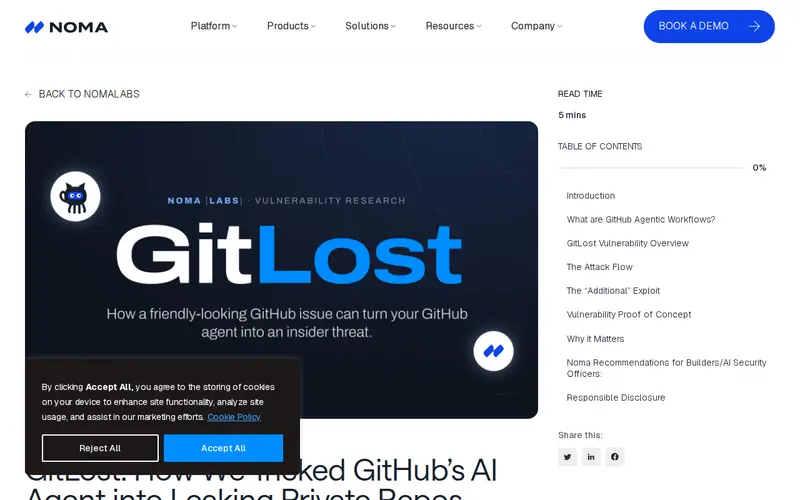
GitLost is a security research project that demonstrated a vulnerability in GitHub's AI agent, exposing how it could be tricked into revealing information from private repositories. The researchers used a novel prompt injection technique to bypass security controls, highlighting a significant risk for developers relying on AI-assisted coding tools. This research provides critical insights into the security posture of AI agents operating within code hosting platforms. Developers can use this information to better understand the potential risks associated with AI integrations and advocate for stronger security measures.
Editorial check
How this page is checked
Source trail
noma.security
External links are separated from Surfaced commentary.
Reader safety
Context before clicks
Product links and external services are not presented as guarantees.
Monetization
No affiliate flag
Ads and commerce links are kept distinct from editorial text.
Surfaced take
Why It’s Useful
This is a critical piece of research for any developer or organization using AI-powered tools on platforms like GitHub. It's a lesser-known but incredibly impactful demonstration of how sophisticated prompt engineering can exploit AI agents, leading to potential data breaches of private code. Mainstream security discussions often focus on traditional vulnerabilities, but GitLost shines a light on the emergent threats posed by AI. Developers who understand these attack vectors can implement more robust safeguards for their AI interactions and educate their teams about the risks. It's particularly valuable for security professionals and forward-thinking development leads who want to stay ahead of AI-related security threats.
In everyday life
When you’d actually reach for this
You might think about GitLost when you're reviewing code for a sensitive project and want to understand potential AI-related data leaks. Or perhaps when considering the security implications of integrating new AI assistants into your development workflow. It's relevant when assessing risks to proprietary codebases.







Enjoyed this? Get five picks like this every morning.
Free daily newsletter — zero spam, unsubscribe anytime.