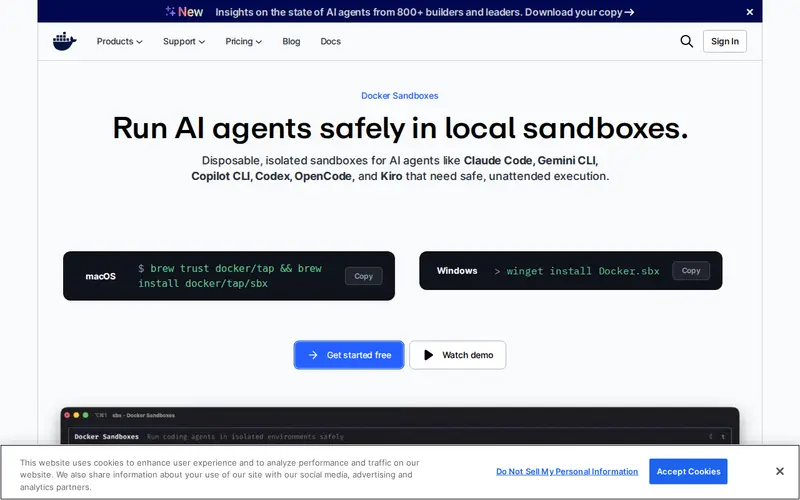
Docker Sandboxes provide disposable, isolated environments specifically designed for running AI agents. This tool allows developers and researchers to experiment with AI models and agents without the risk of polluting their host system or interfering with other processes. Each sandbox is a clean slate, ensuring reproducibility and preventing dependency conflicts. For example, a machine learning engineer could use a sandbox to test a new reinforcement learning agent that requires specific library versions and system configurations, knowing that any issues or dependencies will be confined to that temporary environment.
Editorial check
How this page is checked
Source trail
docker.com
External links are separated from Surfaced commentary.
Reader safety
Context before clicks
Product links and external services are not presented as guarantees.
Monetization
No affiliate flag
Ads and commerce links are kept distinct from editorial text.
Surfaced take
Why It’s Useful
This is a crucial tool for anyone working with AI agents, especially in research or development settings where experimentation is frequent. Unlike traditional Docker containers which often require manual setup and cleanup for agent-specific use cases, Docker Sandboxes streamline the process of creating ephemeral, dedicated environments. This drastically reduces the cognitive load and potential for errors associated with managing multiple, complex AI projects. Power users appreciate the speed at which they can spin up and tear down isolated testing grounds, enabling rapid iteration and a cleaner workflow. It's particularly valuable for those who frequently switch between different AI projects with conflicting requirements or who want to ensure their experiments are perfectly reproducible without system-wide modifications.
In everyday life
When you’d actually reach for this
You're testing a new AI model for your side project and want to avoid messing up your main development setup. You need to quickly try out a different version of a library for a specific agent without affecting other experiments.




Enjoyed this? Get five picks like this every morning.
Free daily newsletter — zero spam, unsubscribe anytime.