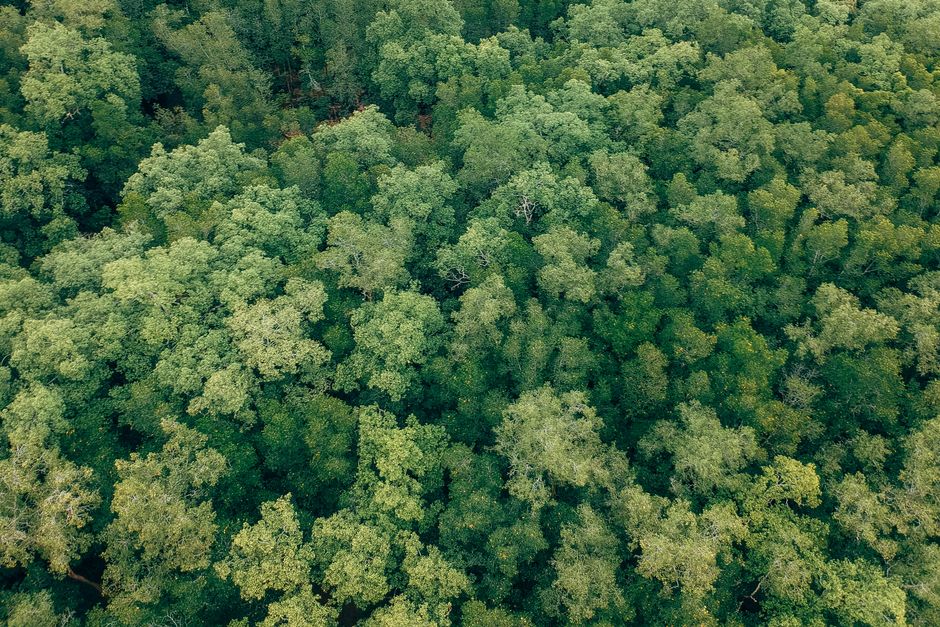
Photo via Pexels
Drone Swarm Reforestation is an integrated system that uses autonomous drone fleets, AI, and specialized seed-planting mechanisms to rapidly and efficiently reforest large, often difficult-to-access, degraded landscapes. Drones first survey terrain using lidar and multispectral sensors to analyze soil composition and topography. AI algorithms then optimize planting patterns and select appropriate native tree species for specific micro-locations. A swarm of planting drones then deploys biodegradable seed pods (containing pre-germinated seeds, nutrients, and protective coatings) at high speeds, targeting precise locations. Key organizations include Dendra Systems (formerly BioCarbon Engineering), BioCarbon Engineering, and Flash Forest. The technology is in pilot projects and early commercial services, with Dendra Systems demonstrating planting rates of over 10,000 seedlings per day per drone, with comparable survival rates to manual planting. This method replaces traditional manual tree planting, which is labor-intensive, slow, costly, and limited by terrain.
Editorial check
How this page is checked
Source trail
arxiv.org
External links are separated from Surfaced commentary.
Reader safety
Context before clicks
Product links and external services are not presented as guarantees.
Monetization
No affiliate flag
Ads and commerce links are kept distinct from editorial text.
Surfaced take
Why It Matters
Deforestation contributes 10-12% of global greenhouse gas emissions annually, and the UN estimates we need to restore 1 billion hectares of forest. Drone swarms offer healthier ecosystems, improved air quality, enhanced biodiversity, and increased carbon sequestration, combating desertification. Winners include environmental organizations, governments with reforestation goals, drone manufacturers, and AI developers; industries causing deforestation and manual tree planters (though new skilled jobs emerge) may be losers. Barriers include ensuring seed pod viability and survival rates in diverse environments, regulatory hurdles for drone swarm operation, initial capital investment, and ensuring genetic diversity. Significant scaling and impact are expected within 5-15 years, becoming a primary reforestation method within 15-30 years. Australia, the UK, and Canada, along with countries facing large deforested areas, are leading this effort. A second-order consequence could be the creation of 'monoculture' forests if not managed with diverse seed mixes, potentially impacting ecological resilience, or the development of new forms of ecological surveillance and management.
Development Stage

Enjoyed this? Get five picks like this every morning.
Free daily newsletter — zero spam, unsubscribe anytime.