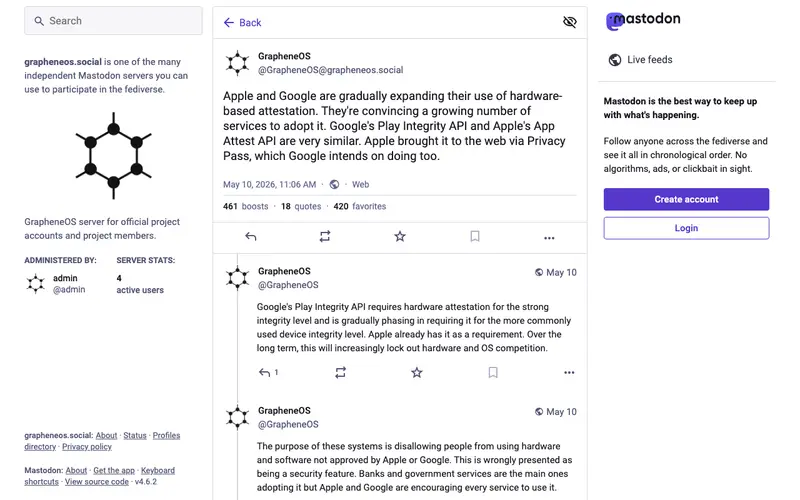
This article discusses how hardware attestation, a security feature that verifies the integrity of a device's hardware and software, can be leveraged by large corporations to enforce monopolies. It explores the technical mechanisms by which hardware attestation can lock users into specific ecosystems or prevent the use of third-party components. The core problem addressed is the potential for security features designed for user protection to be co-opted for vendor control, limiting user choice and fostering an environment where innovation from smaller players is stifled. This is particularly relevant to discussions around device repairability, open-source hardware, and digital rights management.
Editorial check
How this page is checked
Source trail
grapheneos.social
External links are separated from Surfaced commentary.
Reader safety
Context before clicks
Product links and external services are not presented as guarantees.
Monetization
No affiliate flag
Ads and commerce links are kept distinct from editorial text.
Surfaced take
Why It’s Useful
While seemingly niche, this piece is crucial for understanding the subtle ways technology can shape market dynamics and user freedom. It shines a light on how seemingly beneficial security measures like hardware attestation can, in practice, create significant barriers to entry and limit consumer choice. It's essential reading for anyone concerned about vendor lock-in, the right to repair, or the broader implications of digital rights management on innovation and competition. The author provides a deep dive into the technical underpinnings, making it clear why this feature, often lauded for security, can also be a powerful tool for maintaining market dominance. It's a critical perspective for policymakers, technologists, and informed consumers alike.
In everyday life
When you’d actually reach for this
You might read this before buying a new phone to understand how its security features could limit your repair options later. It could also inform your decision about a smart home device when you're considering long-term compatibility and manufacturer lock-in.






Enjoyed this? Get five picks like this every morning.
Free daily newsletter — zero spam, unsubscribe anytime.