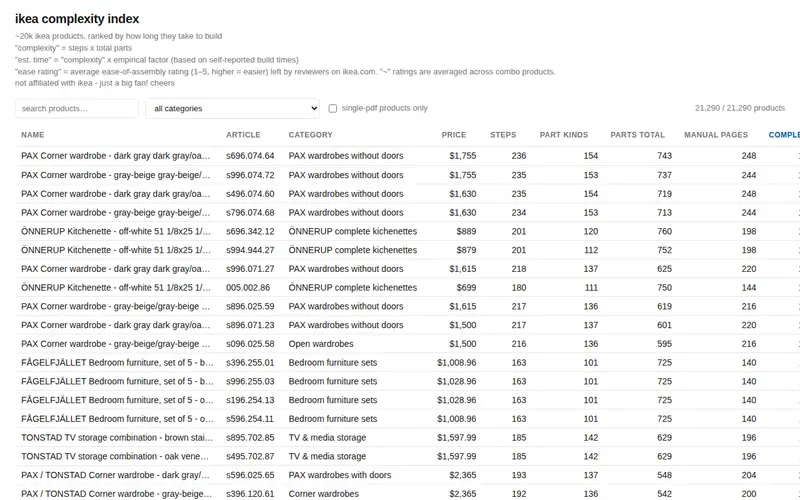
The IKEA Complexity Index is a fascinating, albeit unofficial, project that attempts to quantify the difficulty of assembling various IKEA furniture products. It uses a combination of crowd-sourced data and algorithmic analysis to assign a 'complexity score' to each item. This score is based on factors like the number of parts, the complexity of the instructions, and the estimated assembly time. The goal is to give potential buyers a realistic expectation of the effort involved before they commit to a purchase.
Editorial check
How this page is checked
Source trail
ikea.greg.technology
External links are separated from Surfaced commentary.
Reader safety
Context before clicks
Product links and external services are not presented as guarantees.
Monetization
No affiliate flag
Ads and commerce links are kept distinct from editorial text.
Surfaced take
Why It’s Useful
For anyone who has ever wrestled with an IKEA flat-pack, this tool is a godsend. It's an incredibly niche but genuinely useful resource that taps into a shared frustration. Unlike official product descriptions, which focus on aesthetics and functionality, the IKEA Complexity Index addresses the practical, often daunting, aspect of assembly. Power users appreciate its ability to help them make informed purchasing decisions, avoiding the 'IKEA rage' that can accompany particularly challenging builds. It's also a fun exploration of user-generated data applied to everyday objects, appealing to those who enjoy unconventional metrics and insights into consumer experiences. If you're planning a furniture haul or just curious about the hidden challenges of Scandinavian design, this is worth a look.
In everyday life
When you’d actually reach for this
You're planning a big move and need to figure out which furniture to sell and which to tackle. Before a long vacation, you want to leave your colleagues with a clear understanding of your ongoing projects, including any complex assembly tasks.





Enjoyed this? Get five picks like this every morning.
Free daily newsletter — zero spam, unsubscribe anytime.