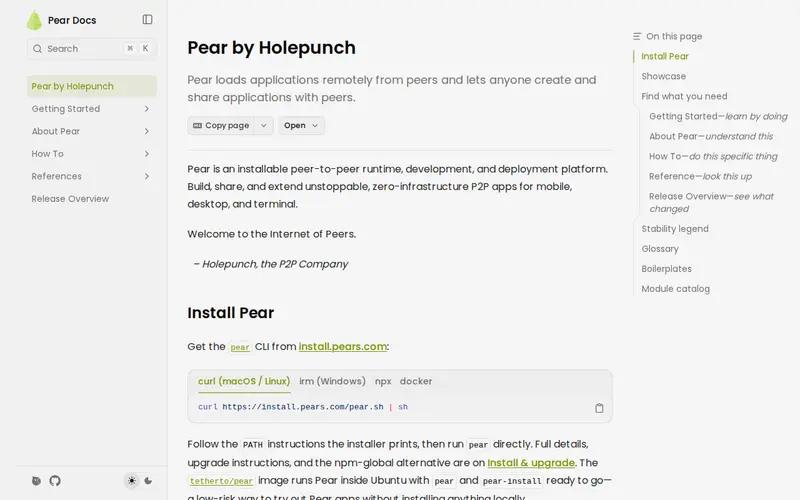
Hypercore Protocol is a decentralized, peer-to-peer network protocol and set of tools for building resilient, distributed applications and data systems. It allows developers to create append-only logs of data that can be replicated and shared between many users without relying on central servers. The protocol is free and open-source, offering robust cryptographic security for data integrity and authenticity. It excels at creating live, constantly updating datasets that are resistant to censorship and downtime, making it ideal for applications requiring persistent and verifiable data availability.
Editorial check
How this page is checked
Source trail
hypercore-protocol.org
External links are separated from Surfaced commentary.
Reader safety
Context before clicks
Product links and external services are not presented as guarantees.
Monetization
No affiliate flag
Ads and commerce links are kept distinct from editorial text.
Surfaced take
Why It’s Useful
For anyone building or participating in decentralized networks, Hypercore Protocol provides the foundational technology for secure, efficient data distribution. It enables applications like decentralized social media, content distribution platforms, and collaborative tools that are inherently more robust and private than traditional client-server models. Its append-only nature ensures data immutability and auditability, a critical feature for applications where trust and transparency are paramount. Enthusiastic users highlight its ability to facilitate real-time data synchronization across vast networks with minimal latency and high fault tolerance. It's particularly valuable for developers aiming to create platforms free from single points of failure or corporate control, empowering users with true data ownership and control.
In everyday life
When you’d actually reach for this
You need to share a growing collection of photos with family who are scattered geographically. You're also looking for a way to collaborate on a shared document with friends without a cloud service.







Enjoyed this? Get five picks like this every morning.
Free daily newsletter — zero spam, unsubscribe anytime.