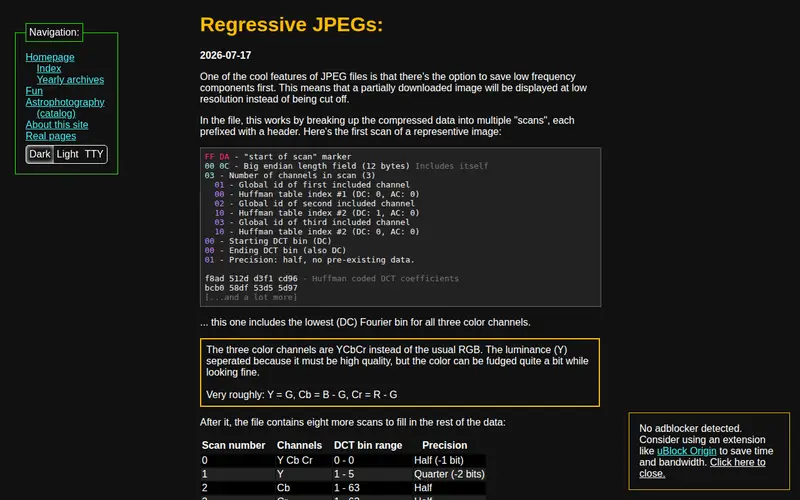
Regressive JPEGs is an experimental web tool that visualizes the progressive decoding stages of JPEG images. It allows users to upload a JPEG file and see how the image is reconstructed block by block as the data is read, mimicking how older modems or slow connections might have displayed images. This provides a fascinating, albeit abstract, look into image compression and transmission processes.
Editorial check
How this page is checked
Source trail
maurycyz.com
External links are separated from Surfaced commentary.
Reader safety
Context before clicks
Product links and external services are not presented as guarantees.
Monetization
No affiliate flag
Ads and commerce links are kept distinct from editorial text.
Surfaced take
Why It’s Useful
While not a practical daily tool for most, Regressive JPEGs is a niche gem for anyone interested in the technical underpinnings of digital images or the history of web technologies. It offers a unique visual representation of a fundamental, yet often unseen, process. Developers debugging image loading issues or designers seeking a deeper understanding of file formats might find value in its diagnostic capabilities. It’s an engaging exploration of how data transforms into a visible picture, making it an excellent resource for educational purposes and for sparking curiosity about the invisible mechanics of the internet.
In everyday life
When you’d actually reach for this
You're trying to understand why a particular image on a slow website is taking ages to load. Or perhaps you're curious about the visual steps involved when a low-bandwidth connection gradually reveals a photograph.






Enjoyed this? Get five picks like this every morning.
Free daily newsletter — zero spam, unsubscribe anytime.