Photo via Pexels
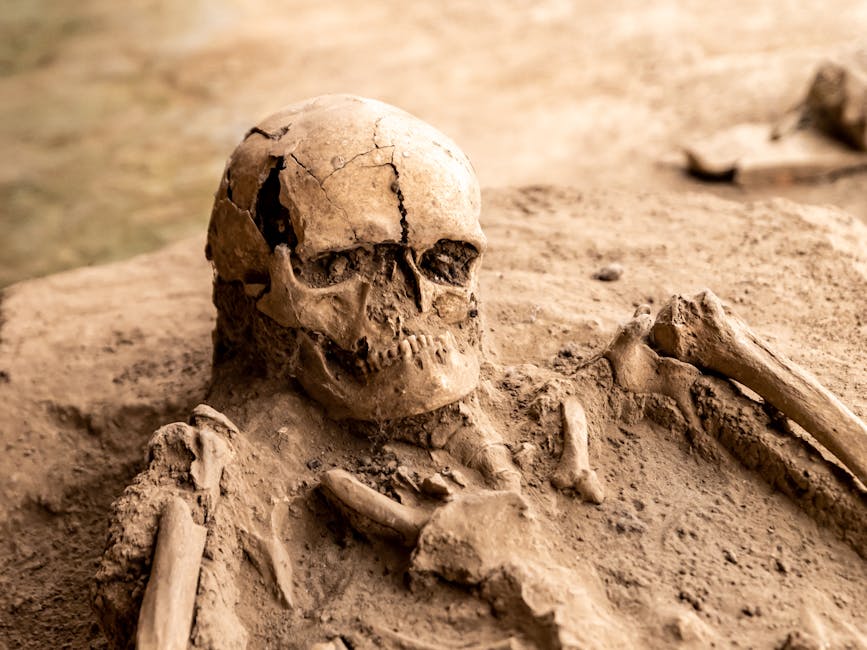
Recent paleontological discoveries in the Cradle of Humankind in South Africa, led by teams including those from the University of the Witwatersrand and the Leakey Foundation, are fundamentally challenging established timelines and pathways for human evolution. Fossils like *Homo naledi* and *Australopithecus sediba*, dated to between 2 and 3 million years ago, exhibit a remarkable mosaic of primitive ape-like and advanced human-like traits, such as small brain sizes combined with human-like feet and hands. These findings, often uncovered through extensive cave excavations and meticulously dated using advanced radiometric techniques, suggest a far more complex and less linear evolutionary path to *Homo sapiens* than previously understood, indicating multiple hominin species co-existing and experimenting with different adaptations.
Editorial check
How this page is checked
Source trail
nature.com
External links are separated from Surfaced commentary.
Reader safety
Context before clicks
Product links and external services are not presented as guarantees.
Monetization
No affiliate flag
Ads and commerce links are kept distinct from editorial text.
Surfaced take
Why It’s Fascinating
The discovery of hominins with such a perplexing blend of features has surprised experts, as it defies the traditional 'ladder-like' progression of human evolution. It overturns the simplistic notion of a single, straightforward lineage leading directly to modern humans, instead suggesting a 'braided stream' or a bush-like family tree with many branches and dead ends. In 5-10 years, these insights could inform our understanding of human adaptability and resilience in changing environments, offering lessons for future climate challenges. For a non-expert, imagine discovering that your family tree isn't a straight line, but a sprawling, complex bush with many cousins you never knew existed, all living at the same time. Paleoanthropologists, evolutionary biologists, and geneticists are the primary beneficiaries, as they re-evaluate existing models of human diversification. This compels us to ask: how much more complexity lies hidden in the fossil record, waiting to redefine our very understanding of what it means to be human?
Related

The git history command
The 'git history' command is a powerful, yet often overlooked, command-line tool that provides an elegant way to visualize the commit history of a Git…

Archival Research Hub
The Archival Research Hub is a curated online platform that aggregates and provides access to a vast collection of digitized historical documents from various…
Enjoyed this? Get five picks like this every morning.
Free daily newsletter — zero spam, unsubscribe anytime.