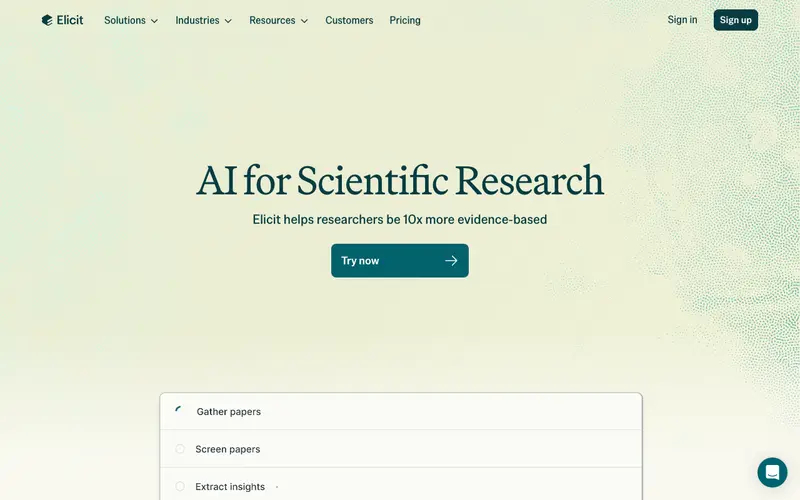
Elicit is an AI research assistant developed by Ought, a non-profit research organization focused on making AI more useful for open-ended problems. Its core feature allows users to ask research questions in natural language and receive synthesized answers, along with relevant research papers and extracted key information. The tool is primarily designed for academics, researchers, and anyone needing to quickly extract insights and evidence from large bodies of scientific literature. A user would typically open Elicit when faced with a broad research question or needing to quickly understand the main findings and methodologies across multiple papers without reading each one in full. It uses large language models to process scientific articles and doesn't directly integrate with external platforms but provides citations and links to original papers.
Editorial check
How this page is checked
Source trail
elicit.org
External links are separated from Surfaced commentary.
Reader safety
Context before clicks
Product links and external services are not presented as guarantees.
Monetization
No affiliate flag
Ads and commerce links are kept distinct from editorial text.
Surfaced take
Why It’s Useful
Unlike general-purpose search engines or even academic databases, Elicit provides direct answers to complex questions by synthesizing information from multiple sources, making it far more efficient for literature reviews. For the medical researcher needing to quickly assess treatment efficacy across dozens of trials, Elicit can extract outcomes and methodologies much faster than manual review. For the policy analyst needing to understand the societal impacts of a new technology, it provides distilled insights and supporting evidence from various studies. A generous free tier allows for a certain number of credits per month, with paid plans offering more extensive usage. A less obvious but powerful feature is its ability to "extract specific data from papers" into a table format, like participant numbers or intervention types. Its relative novelty and focus on AI-driven synthesis mean it's still growing its user base compared to established tools. Elicit is actively developed, with frequent updates improving its model accuracy and feature set, and it has a growing community of academic users.







Enjoyed this? Get five picks like this every morning.
Free daily newsletter — zero spam, unsubscribe anytime.