Photo via Pexels
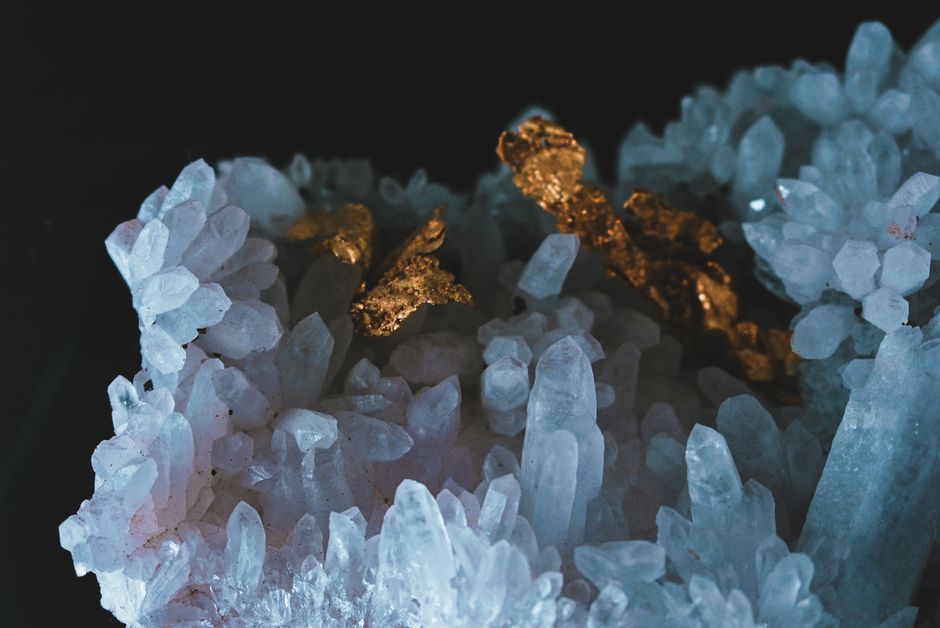
In a remarkable feat of paleontology and microbiology, researchers revived microorganisms that had been dormant for an estimated 250 million years within halite (rock salt) crystals. The study, published in *Geology* (2023) by Dr. Huaijun Chen and colleagues, involved carefully extracting and culturing microbes from ancient salt deposits. The successful revival of these long-dormant organisms demonstrates an extraordinary capacity for survival and raises intriguing questions about the persistence of life in extreme environments over geological timescales.
Editorial check
How this page is checked
Source trail
pubs.geoscienceworld.org
External links are separated from Surfaced commentary.
Reader safety
Context before clicks
Product links and external services are not presented as guarantees.
Monetization
No affiliate flag
Ads and commerce links are kept distinct from editorial text.
Surfaced take
Why It’s Fascinating
The idea of life persisting for millennia is compelling, but life enduring for hundreds of millions of years, encased within rock salt, is on a different level entirely. These halophilic bacteria, found trapped within fluid inclusions inside ancient salt crystals, were able to be rehydrated and resuscitated. This finding has profound implications for astrobiology, suggesting that life might endure in seemingly inhospitable environments on other planets, particularly those with saline oceans or subsurface salt deposits. It also provides an unprecedented window into ancient microbial ecosystems, allowing scientists to study life forms that existed during the Permian period, a time of significant geological and biological change. The discovery compels us to consider the limits of life's resilience and the possibility of 'time capsules' of ancient biology scattered throughout the solar system and beyond. Could similar ancient life forms be waiting to be awakened within salt deposits on Mars or Europa?
Related

For first time, a cell built from scratch grows and divides
This article from Quanta Magazine reports on a groundbreaking scientific achievement: the creation of the first fully synthetic cell capable of autonomous…

The Great Courses Plus
The Great Courses Plus is a subscription-based streaming service that offers access to thousands of in-depth university-level courses taught by professors and…
Enjoyed this? Get five picks like this every morning.
Free daily newsletter — zero spam, unsubscribe anytime.