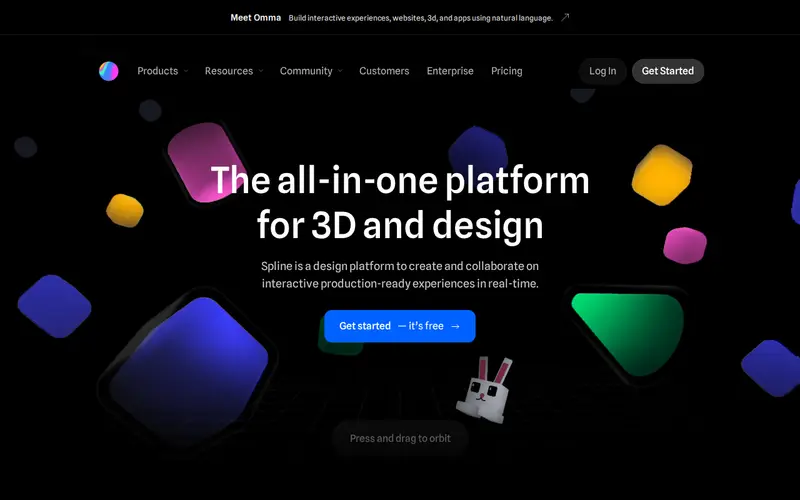
Spline is a collaborative 3D design tool that empowers individuals and teams to create interactive 3D scenes and animations without needing extensive technical expertise. It offers a web-based, intuitive interface that allows for the creation of complex 3D models, animations, and even AR experiences directly in the browser. Spline provides a freemium model, with generous free tier for individuals and paid plans for teams and advanced features. Its strength lies in making 3D design accessible, enabling rapid prototyping and visually engaging content creation.
Editorial check
How this page is checked
Source trail
spline.design
External links are separated from Surfaced commentary.
Reader safety
Context before clicks
Product links and external services are not presented as guarantees.
Monetization
No affiliate flag
Ads and commerce links are kept distinct from editorial text.
Surfaced take
Why It’s Useful
Spline democratizes 3D design, making it approachable for designers, marketers, and developers who previously found 3D software too complex or expensive. Its real-time collaboration features mean teams can work on the same scene simultaneously, fostering creativity and efficiency. The tool excels at quickly generating dynamic visuals for websites, presentations, and social media content, eliminating the need for outsourcing or wrestling with traditional, steep-learning-curve 3D software. Users love its ability to export scenes for web use (like WebGL) and its growing library of components and templates that accelerate the design process. It’s particularly valuable for those looking to add a modern, immersive dimension to their digital projects without a huge time or financial investment.
In everyday life
When you’d actually reach for this
You might use Spline to visualize a budget breakdown for a group trip or to quickly mock up an idea for a website banner. It's also handy for creating a simple animated explainer for a project before you hand it over to a colleague.







Enjoyed this? Get five picks like this every morning.
Free daily newsletter — zero spam, unsubscribe anytime.