
Photo via Pexels
Acoustic metamaterials are artificially engineered materials that derive their unusual sound-manipulating properties from their structure rather than their composition, allowing for phenomena like perfect sound absorption or acoustic cloaking. Leading research groups include those at Duke University, the Hong Kong University of Science and Technology, and industrial partners like Boeing for aerospace applications. They are currently in advanced research and prototype stages, with various lab-scale demonstrations of their unique capabilities. In 2017, a team from Duke University demonstrated an acoustic metamaterial capable of absorbing 99.7% of incident sound at specific frequencies, published in Physical Review X. This offers superior, tunable noise cancellation compared to conventional soundproofing materials that rely on mass and thickness, which are often bulky and less effective at low frequencies.
Editorial check
How this page is checked
Source trail
people.duke.edu
External links are separated from Surfaced commentary.
Reader safety
Context before clicks
Product links and external services are not presented as guarantees.
Monetization
No affiliate flag
Ads and commerce links are kept distinct from editorial text.
Surfaced take
Why It Matters
Noise pollution is a significant environmental and health issue, impacting billions globally and costing industries billions in productivity loss and health-related expenses; the global acoustic materials market is over $12 billion. Imagine living in a city where apartment walls silence all outside noise, factories operate without deafening machinery sounds, and concert halls can precisely direct sound without echoes, creating perfectly controlled auditory environments. Architectural firms and automotive/aerospace manufacturers developing quieter products will gain a competitive advantage, while traditional insulation and noise barrier companies may need to innovate. Key barriers include scaling production of these complex structures, ensuring broadband performance across various frequencies, and integrating them aesthetically into existing designs. Niche commercial applications, such as specialized sound studios or industrial machinery mufflers, could appear within 4-6 years, with broader architectural integration in 8-12 years. China, with its rapid urbanization and manufacturing capabilities, and the US, with its strong research institutions, are major players. A second-order consequence could be a significant improvement in mental well-being and cognitive function in urban areas, as constant background noise is dramatically reduced.
Development Stage
Related
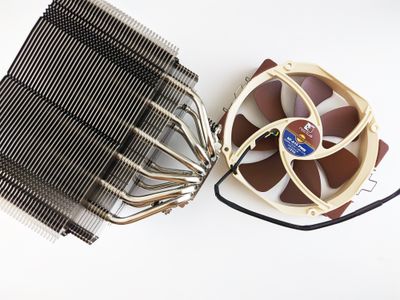
Why does it take so long to release black fan versions?
This article from Noctua, a renowned manufacturer of PC cooling solutions, delves into the intricate reasons behind the lengthy development and release cycles…

OpenMythos
OpenMythos is a theoretical reconstruction of the Claude Mythos architecture, built from first principles using available research literature. It aims to…
Enjoyed this? Get five picks like this every morning.
Free daily newsletter — zero spam, unsubscribe anytime.