Photo via Pexels
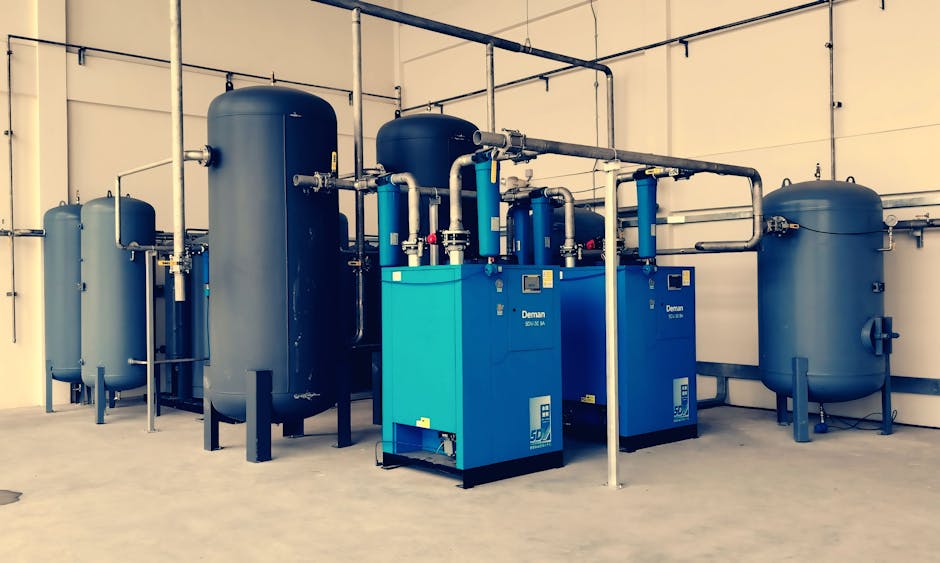
Advanced Compressed Air Energy Storage (A-CAES) improves upon traditional CAES by incorporating thermal energy storage to capture and reuse the heat generated during air compression, significantly boosting efficiency. Electrical energy is used to compress air into underground caverns (salt domes, aquifers, abandoned mines), and then released to drive turbines when electricity is needed. This closed-loop system minimizes energy loss compared to traditional diabatic CAES. Companies like Hydrostor and SustainX, alongside research from the US Department of Energy's ARPA-E program, are pioneering A-CAES. The technology is in the early commercialization and demonstration phase, with several large-scale projects planned. Hydrostor's 500 MW/4000 MWh Peaking Power project in Rosamond, California, received a $249 million loan guarantee from the DOE in 2023, signaling significant progress. A-CAES offers gigawatt-hour scale storage, long operational life (30+ years), and uses readily available components, making it a robust alternative to chemical batteries for long-duration needs.
Editorial check
How this page is checked
Source trail
hydrostor.ca
External links are separated from Surfaced commentary.
Reader safety
Context before clicks
Product links and external services are not presented as guarantees.
Monetization
No affiliate flag
Ads and commerce links are kept distinct from editorial text.
Surfaced take
Why It Matters
The problem A-CAES solves is the economic and environmental challenge of grid-scale, long-duration energy storage required to integrate 100% renewable energy, a market projected to reach $100 billion by 2040. Mainstream A-CAES systems would provide massive, dispatchable energy reserves, allowing entire regions to run on renewables even during prolonged lulls in wind and solar generation. Utility companies, renewable project developers, and geological engineering firms would see substantial benefits, while natural gas peaker plants would become largely obsolete. Technical barriers include identifying suitable geological formations for underground caverns, managing the capital-intensive construction, and optimizing the thermal energy recovery cycles for maximum efficiency. Widespread commercial deployment is anticipated between 2035-2050, as costs decrease and project financing matures. The US, Canada, and Germany are key regions for A-CAES development and deployment efforts. A second-order consequence is the potential to co-locate A-CAES facilities with renewable energy farms in remote areas, creating entirely new energy hubs and infrastructure developments.
Development Stage
Related

Affine
Affine is a versatile productivity application designed to be an all-in-one workspace for individuals and teams. It combines note-taking, project management…

sd
sd is an open-source command-line utility, written in Rust, designed as a modern, user-friendly, and blazing-fast alternative to the traditional `sed` command…
Enjoyed this? Get five picks like this every morning.
Free daily newsletter — zero spam, unsubscribe anytime.