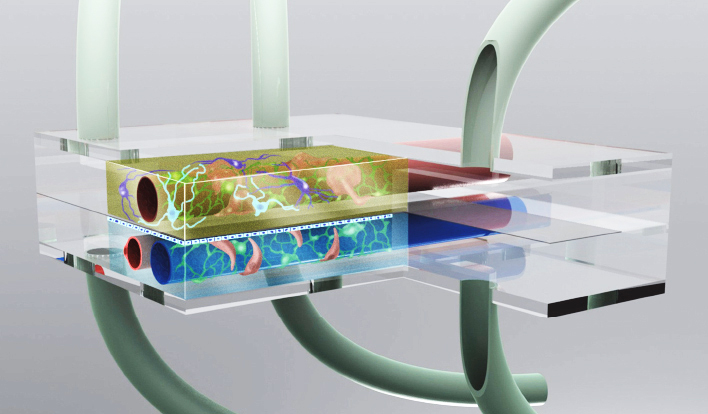
Brain-on-a-chip systems are microfluidic devices or 3D cell culture models designed to replicate the intricate architecture and functional activity of brain tissue in a controlled in vitro environment. These systems often integrate with microelectrode arrays to monitor and stimulate neural activity, providing a more complex biological model than traditional 2D cell cultures. Key players in this evolving field include academic institutions like the Wyss Institute at Harvard and Johns Hopkins University, along with companies like Emulate Inc. (extending organ-on-a-chip platforms). The technology is in the Advanced Research stage, primarily used for drug discovery and disease modeling. In 2023, researchers at Johns Hopkins developed a 3D brain organoid system capable of demonstrating basic learning and memory functions for neurological drug testing. These systems offer a far more physiologically relevant model for studying neurological diseases and testing drug effects compared to animal models or simpler 2D cultures, bridging the gap to human clinical trials.
Editorial check
How this page is checked
Source trail
emulatebio.com
External links are separated from Surfaced commentary.
Reader safety
Context before clicks
Product links and external services are not presented as guarantees.
Monetization
No affiliate flag
Ads and commerce links are kept distinct from editorial text.
Surfaced take
Why It Matters
The inherent limitations of animal models and 2D cell cultures in accurately predicting human brain responses to drugs and diseases contribute to extremely high failure rates in neurological clinical trials, costing billions. Imagine accelerated and ethical screening of therapies for neurodegenerative diseases like Alzheimer's, personalized medicine approaches for psychiatric disorders, and a deeper understanding of complex brain functions in a highly controlled environment. The pharmaceutical industry, neuroscience research, and precision medicine sectors stand to benefit immensely, potentially reducing reliance on animal testing for certain research phases. Key barriers include the immense challenge of replicating the full complexity and long-term viability of the human brain, as well as ethical considerations surrounding the development of advanced 'mini-brains.' A timeline of 5-15 years is realistic for widespread use in drug discovery and personalized medicine. The US, Europe, and Japan, with significant academic and biotech involvement, are leading the research efforts. A second-order consequence is a revolution in neurological drug discovery, dramatically increasing the success rate for therapies targeting brain disorders.
Development Stage
Related

Desktopcolors.com
Desktopcolors.com is a delightful, niche website that serves as a digital museum of the iconic solid background colors used in classic operating systems. It…

Open Design
open-design is a cutting-edge, local-first, open-source tool designed to generate brand-grade design systems powered by AI. It leverages models like Claude…
Enjoyed this? Get five picks like this every morning.
Free daily newsletter — zero spam, unsubscribe anytime.