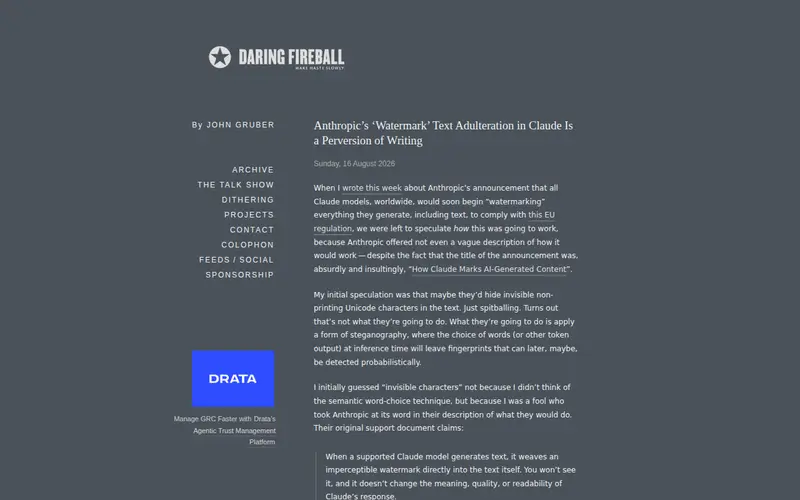
This article from Daring Fireball critically examines Anthropic's decision to embed imperceptible watermarks in the text generated by their Claude AI models. It argues that this practice, while intended for detecting AI-generated content, fundamentally alters the nature of writing and raises ethical concerns about authorship and the manipulation of information. The piece delves into the implications for writers, readers, and the broader digital landscape, questioning the trustworthiness of AI outputs.
Editorial check
How this page is checked
Source trail
daringfireball.net
External links are separated from Surfaced commentary.
Reader safety
Context before clicks
Product links and external services are not presented as guarantees.
Monetization
No affiliate flag
Ads and commerce links are kept distinct from editorial text.
Surfaced take
Why It’s Useful
This is an essential read for anyone concerned with the integrity of digital content and the evolving role of AI in creative and informational fields. It provides a nuanced, critical perspective often missing from more technical discussions about AI watermarking. The article helps readers understand the potential downsides of such technologies, urging a more thoughtful approach to their implementation. It's particularly useful for writers, journalists, educators, and researchers who need to grapple with the provenance and authenticity of text in the age of advanced AI.
In everyday life
When you’d actually reach for this
You're an author researching the ethical implications of AI-generated text for an upcoming book. This article provides a sharp, thought-provoking analysis that helps you frame the debate around AI watermarking and its impact on the future of authorship.







Enjoyed this? Get five picks like this every morning.
Free daily newsletter — zero spam, unsubscribe anytime.