Photo via Pexels
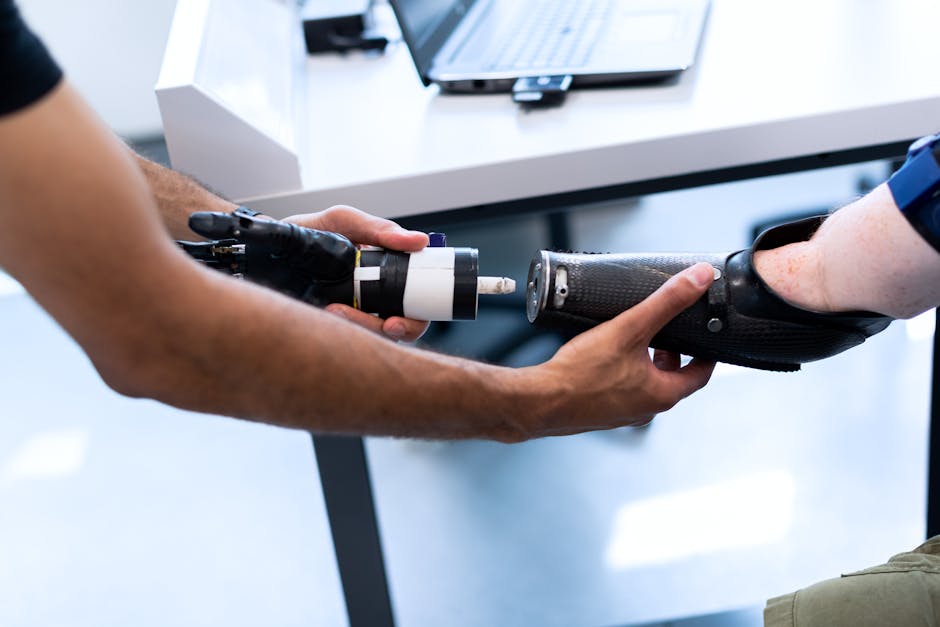
Exoskeleton-Integrated Brain-Computer Interfaces combine advanced robotic exoskeletons with sophisticated BCIs to restore independent mobility for individuals with severe paralysis. This technology functions by decoding neural signals, derived from either invasive implants (like microelectrode arrays) or non-invasive methods (such as EEG or ECoG), which represent the user's movement intent. These decoded signals are then translated by AI algorithms into precise commands for the exoskeleton's motors, enabling natural movement. Key organizations driving this innovation include EPFL (École Polytechnique Fédérale de Lausanne) in Switzerland, the University of Pittsburgh Medical Center (UPMC), and companies like Rewalk Robotics and Cyberdyne. The technology is in advanced clinical trials and early commercialization for specific paralysis conditions. A significant milestone was achieved in 2023 when a participant in an EPFL project, paralyzed from the neck down, demonstrated the ability to walk autonomously and navigate complex environments using a mind-controlled exoskeleton, as reported in a Nature Medicine publication. This offers a level of intuitive control far beyond existing joystick or button-based exoskeletons.
Editorial check
How this page is checked
Source trail
cyberdyne.jp
External links are separated from Surfaced commentary.
Reader safety
Context before clicks
Product links and external services are not presented as guarantees.
Monetization
No affiliate flag
Ads and commerce links are kept distinct from editorial text.
Surfaced take
Why It Matters
Millions worldwide live with paralysis due to spinal cord injury, stroke, or other neurological conditions, facing significant mobility limitations, dependence, and secondary health issues. When mainstream, this technology could grant unprecedented independence to paralyzed individuals, allowing them to stand, walk, and interact with their environment without assistance, dramatically improving their quality of life and social integration. Paralyzed individuals, rehabilitation centers, and specialized medical device companies would be major winners, while traditional wheelchair manufacturers might see a shift in demand. Major barriers include improving the robustness and reliability of BCI signal decoding, enhancing the safety and agility of exoskeletons in real-world environments, and reducing the prohibitively high cost of these integrated systems. A realistic timeline for broader availability and affordability is 8-15 years. Countries like the US, Switzerland, Japan, and France are leading research and development efforts. A second-order consequence is the redefinition of 'disability' and the potential for highly integrated human-machine systems to become commonplace in daily life, challenging perceptions of human physical limits.
Development Stage
Related

Alva
Alva is an open-source design system builder created by a community of contributors, focusing on bridging the gap between design and development by using real…

Clera
Clera is an AI-powered talent agent designed to help individuals find job opportunities that genuinely align with their aspirations. It operates through…
Enjoyed this? Get five picks like this every morning.
Free daily newsletter — zero spam, unsubscribe anytime.