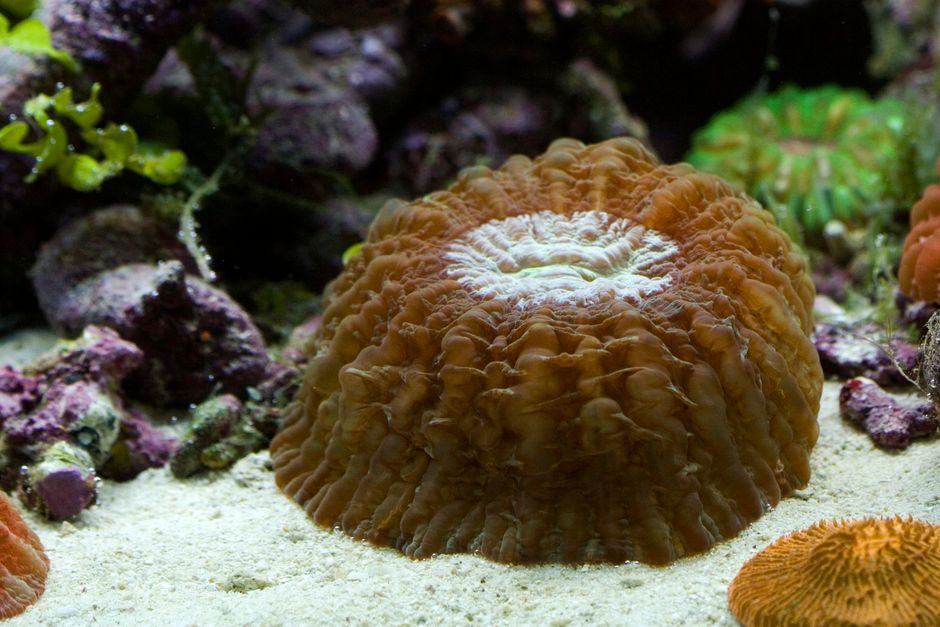
Photo via Pexels
Scientists at the Australian Institute of Marine Science (AIMS) have developed 'super corals' through assisted evolution, demonstrating a 20% higher survival rate in warmer, more acidic ocean conditions compared to their wild counterparts. These corals were bred selectively for increased heat and acid tolerance through multiple generations in controlled aquarium settings. The methodology involved exposing different coral genotypes to simulated climate change stressors and identifying the most resilient offspring for further breeding. This breakthrough offers a glimmer of hope for the future of threatened coral reefs. Published in *Proceedings of the National Academy of Sciences* (PNAS) in 2020.
Editorial check
How this page is checked
Source trail
science.org
External links are separated from Surfaced commentary.
Reader safety
Context before clicks
Product links and external services are not presented as guarantees.
Monetization
No affiliate flag
Ads and commerce links are kept distinct from editorial text.
Surfaced take
Why It’s Fascinating
This research represents a significant shift in coral conservation, moving beyond passive protection to active, interventionist strategies, a controversial but increasingly necessary approach as climate change accelerates. Experts are cautiously optimistic, recognizing the potential for these 'super corals' to accelerate restoration efforts, though it doesn't solve the root cause of climate change. In the next 5-10 years, these selectively bred corals could be deployed in large-scale restoration projects on critically degraded reefs, significantly improving their chances of survival and recovery. Imagine these corals as highly trained marine athletes, specifically bred to withstand the increasing pressures of a changing ocean, giving threatened reefs a fighting chance. Marine biologists, conservationists, and coastal communities reliant on reefs will benefit. What ethical considerations arise when humans actively intervene in the evolution of species to combat climate change, and where do we draw the line?
Related
OrcaSlicer
OrcaSlicer is an open-source 3D slicing software that provides comprehensive and enhanced support for Bambu Lab printers. It aims to offer a superior slicing…

Loop Habit Tracker
Loop Habit Tracker, developed by Soron, is a free and open-source habit tracking app primarily for Android, emphasizing simplicity, privacy, and data…
Enjoyed this? Get five picks like this every morning.
Free daily newsletter — zero spam, unsubscribe anytime.