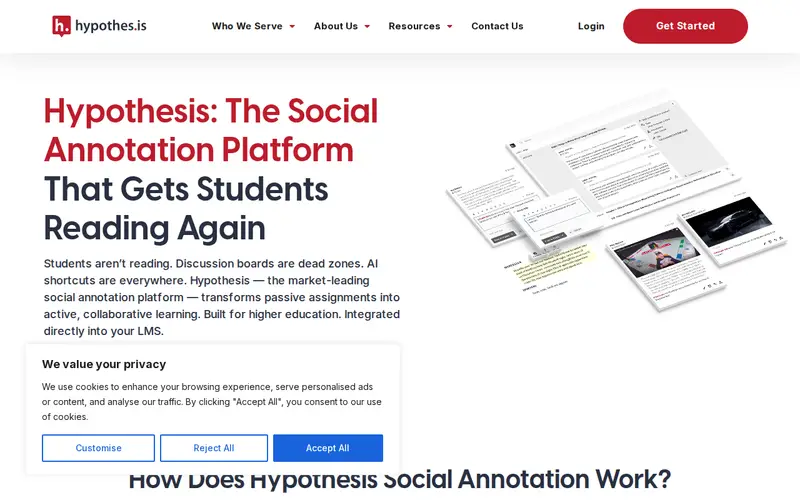
Hypothesis is an open-source annotation tool that allows you to highlight and comment on any webpage or PDF. It functions as a browser extension, enabling you to privately annotate content or engage in public discussions with others. This collaborative platform is free to use, making it accessible for students, researchers, and anyone who wants to deepen their engagement with online information. It excels at turning passive reading into an active, social learning experience.
Editorial check
How this page is checked
Source trail
web.hypothes.is
External links are separated from Surfaced commentary.
Reader safety
Context before clicks
Product links and external services are not presented as guarantees.
Monetization
No affiliate flag
Ads and commerce links are kept distinct from editorial text.
Surfaced take
Why It’s Useful
Hypothesis transforms the way you interact with online content by fostering a layered understanding through annotations. You can save notes for yourself, share them with specific groups, or contribute to public scholarly conversations on articles and websites. This feature is invaluable for researchers tracking a topic, students collaborating on a reading assignment, or professionals sharing insights on industry news. Its robust API also allows for integration with other research tools, further solidifying its place in an academic or professional workflow. Enthusiasts praise its ability to foster focused discussion and its commitment to open scholarship.
In everyday life
When you’d actually reach for this
When you find an interesting article online, you can use Hypothesis to highlight key paragraphs and add your own thoughts for future reference. Later, you can revisit your annotations or see what others have discussed on the same page, making it easier to recall information and engage with complex topics.







Enjoyed this? Get five picks like this every morning.
Free daily newsletter — zero spam, unsubscribe anytime.