
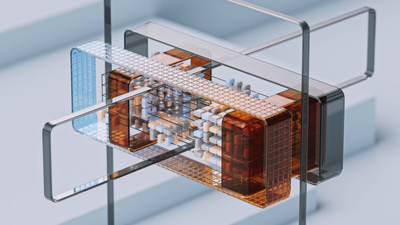
Integrated optical atomic clocks miniaturize ultra-precise atomic clocks, traditionally bulky lab equipment, onto a silicon or glass chip using photonic integrated circuits. They operate by trapping and cooling atoms (e.g., rubidium, strontium) and interrogating their optical transitions with a highly stable laser, providing timekeeping accuracy far beyond quartz oscillators. NIST, the California Institute of Technology (Caltech), and startups like Xairos are actively developing this cutting-edge technology. The technology is in advanced research and prototype stages, with significant progress in reducing size and power consumption. In 2023, NIST and the University of Colorado Boulder demonstrated a chip-scale optical atomic clock based on rubidium atoms, achieving an instability of 10^-12 at one second. These chip-scale devices offer precision rivaling large laboratory clocks in a footprint suitable for portable applications, dramatically expanding their utility.
Editorial check
How this page is checked
Source trail
nature.com
External links are separated from Surfaced commentary.
Reader safety
Context before clicks
Product links and external services are not presented as guarantees.
Monetization
No affiliate flag
Ads and commerce links are kept distinct from editorial text.
Surfaced take
Why It Matters
Ultra-precise timing is critical for next-generation GPS, secure communication, and scientific instruments, affecting a global market worth billions. This would enable centimeter-level navigation accuracy, highly secure quantum-resistant communication protocols for military and finance, and new fundamental physics experiments from a portable device. Aerospace and defense industries, telecommunications providers, and scientific instrument manufacturers would be major beneficiaries, while providers of less precise timing solutions might become obsolete. The main hurdles include maintaining atomic coherence and laser stability in a miniaturized, robust package, as well as managing power consumption for long-term operation. Early commercial applications could be seen in 7-12 years, with the US, EU, and China competing for dominance in quantum timing technologies. A second-order consequence is the potential for new forms of highly precise distributed sensor networks, synchronized to an unprecedented degree, enabling new scientific discoveries and industrial control.
Development Stage
Related

Replit AI Code Optimizer
Replit's AI Code Optimizer is an integrated feature within the Replit online IDE designed to help developers write cleaner, more efficient, and idiomatic code…
Adobe Firefly
Adobe Firefly is a family of creative generative AI models designed to be safe for commercial use. It empowers users to generate images, text effects, and…
Enjoyed this? Get five picks like this every morning.
Free daily newsletter — zero spam, unsubscribe anytime.