
Photo via Pexels
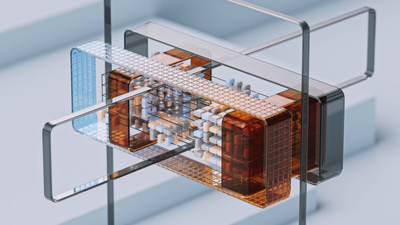
Integrated photonic gyroscopes miniaturize high-precision rotational sensors by confining light within a silicon waveguide ring resonator. These devices detect rotation by measuring the Sagnac effect, where light traveling in opposite directions around a loop experiences different path lengths due to rotation. Research is being conducted by companies like KVH Industries (though more traditional FOGs) and academic groups at the California Institute of Technology (Caltech) and the University of California, Santa Barbara. The technology is primarily in advanced research and prototype stages, focusing on achieving competitive performance with fiber optic gyroscopes (FOGs) and MEMS gyroscopes. In 2022, Caltech researchers published a breakthrough in Nature Photonics demonstrating an integrated silicon nitride gyroscope with a bias instability of 0.0004 degrees per hour, a performance level previously only achievable by much larger and more expensive devices. This offers a path to significantly smaller, lighter, and potentially more robust gyroscopes than traditional mechanical or fiber-optic designs.
Editorial check
How this page is checked
Source trail
leti-cea.com
External links are separated from Surfaced commentary.
Reader safety
Context before clicks
Product links and external services are not presented as guarantees.
Monetization
No affiliate flag
Ads and commerce links are kept distinct from editorial text.
Surfaced take
Why It Matters
Current high-precision gyroscopes for navigation systems in aircraft, missiles, and autonomous vehicles are bulky and expensive, limiting the performance and size of critical defense and commercial systems. Mainstream integrated photonic gyroscopes would enable highly accurate, drift-free navigation in miniaturized form factors, leading to smaller, more agile drones, more precise missile guidance, and reliable autonomous vehicle positioning without GPS. Defense contractors and autonomous vehicle manufacturers would win, while manufacturers of older, larger gyroscope technologies would face steep competition. Technical barriers include achieving ultra-low optical loss in waveguides, stable packaging, and mitigating thermal effects; regulatory hurdles are minimal but export controls could apply. We might see specialized military and high-end commercial applications within 7-10 years, with broader adoption following. Countries with strong aerospace and defense industries, such as the US, UK, and France, are actively pursuing this. A second-order consequence is the potential for new classes of swarm robotics that require extremely precise relative positioning and orientation without external signals, opening up possibilities for complex collaborative tasks in GPS-denied environments.
Development Stage
Related

Glaze
Glaze is a powerful defense tool developed by the University of Chicago's Sand Lab to protect digital artists' work from unauthorized AI training. It works by…
Adobe Firefly
Adobe Firefly is a family of creative generative AI models designed to be safe for commercial use. It empowers users to generate images, text effects, and…
Enjoyed this? Get five picks like this every morning.
Free daily newsletter — zero spam, unsubscribe anytime.