Photo via Pexels
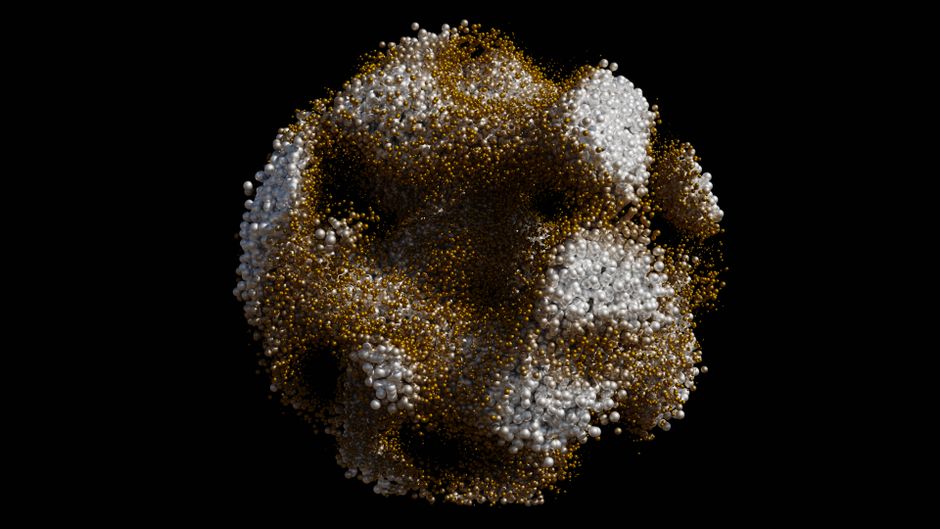
The LHCb collaboration at CERN has announced the discovery of a new exotic tetraquark particle, named Tcc+, which is composed of four quarks: two charm quarks and two anti-up/anti-down quarks. This particle is the longest-lived exotic hadron ever found, with a lifetime several hundred times longer than other exotic particles of its type, and a measured mass of approximately 3875 MeV/c². Researchers observed this state by analyzing data from proton-proton collisions at the Large Hadron Collider, identifying its decay products into lighter particles. This discovery offers unprecedented insight into the strong nuclear force, potentially revealing new ways quarks can bind together. The results were presented at the EPS-HEP conference in July 2023.
Editorial check
How this page is checked
Source trail
arxiv.org
External links are separated from Surfaced commentary.
Reader safety
Context before clicks
Product links and external services are not presented as guarantees.
Monetization
No affiliate flag
Ads and commerce links are kept distinct from editorial text.
Surfaced take
Why It’s Fascinating
The discovery of Tcc+ is groundbreaking because it represents a completely new class of matter, challenging the traditional understanding that hadrons are only made of two (mesons) or three (baryons) quarks. It confirms the existence of multi-quark states beyond the standard model, paving the way for a deeper understanding of quantum chromodynamics. Over the next decade, studying such exotic hadrons could help physicists develop more complete models of the strong force, potentially leading to new insights into the structure of neutron stars or even the early universe. It's like finding a new type of LEGO brick that allows you to build structures previously thought impossible, opening up entirely new architectural possibilities. This primarily benefits nuclear physicists, particle physicists, and astrophysicists. What other stable, exotic combinations of quarks might exist that defy our current expectations?
Related
Gleam
Gleam is an open-source, interactive data visualization tool developed by Google that enables rapid exploration of large datasets directly in your web browser…

Snippyly
Snippyly, developed by a team focused on real-time collaboration, is a browser-based tool for capturing screenshots, recording screen videos, and sharing code…
Enjoyed this? Get five picks like this every morning.
Free daily newsletter — zero spam, unsubscribe anytime.