Photo via Pexels
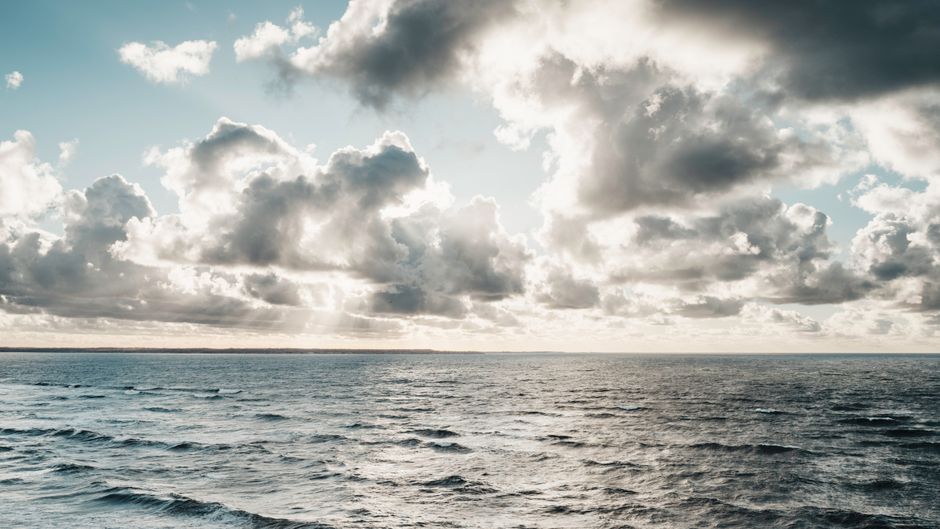
Marine Cloud Brightening aims to increase the reflectivity of low-lying marine clouds by spraying microscopic sea salt particles into the atmosphere. These salt particles act as cloud condensation nuclei, leading to more, smaller cloud droplets, which makes the clouds brighter and more reflective of sunlight. Key research is being conducted by organizations like the University of Washington's Marine Cloud Brightening Project and the Sydney Institute of Marine Science. The technology is primarily in the advanced research and early prototype stage, with small-scale field trials underway. In March 2023, researchers conducted an onshore trial in Australia near the Great Barrier Reef, using a modified sprayer to test aerosol generation and dispersion patterns. Unlike stratospheric aerosol injection which affects global temperatures, MCB offers the potential for more localized cooling, making it a targeted intervention.
Editorial check
How this page is checked
Source trail
Editorial source pending
External links are separated from Surfaced commentary.
Reader safety
Context before clicks
Product links and external services are not presented as guarantees.
Monetization
No affiliate flag
Ads and commerce links are kept distinct from editorial text.
Surfaced take
Why It Matters
Warming oceans threaten critical marine ecosystems like coral reefs, which support 25% of all marine life and global fisheries worth billions. Widespread MCB could create cooler 'refugia' for coral reefs and prevent regional heatwaves, preserving biodiversity and coastal economies. Coastal communities and tourism industries reliant on healthy marine environments would be major winners, while shipping lanes or fisheries sensitive to altered wind patterns could be negatively impacted. Technical hurdles include achieving precise control over aerosol distribution and understanding complex cloud microphysics; regulatory issues involve transboundary impacts and international governance. If successful, localized deployment could begin within 10-20 years, with broader applications in 30-50 years. Australia, the US, and various European marine research centers are at the forefront, particularly for reef protection. A less considered consequence is the potential for altering regional precipitation patterns, inadvertently causing droughts or floods in nearby landmasses.
Development Stage
Related

Graphistry
Graphistry is a GPU-accelerated visual graph analytics platform that allows users to interactively visualize and explore massive networks and relationships in…

Loop Habit Tracker
Loop Habit Tracker, developed by Soron, is a free and open-source habit tracking app primarily for Android, emphasizing simplicity, privacy, and data…
Enjoyed this? Get five picks like this every morning.
Free daily newsletter — zero spam, unsubscribe anytime.