Photo via Pexels
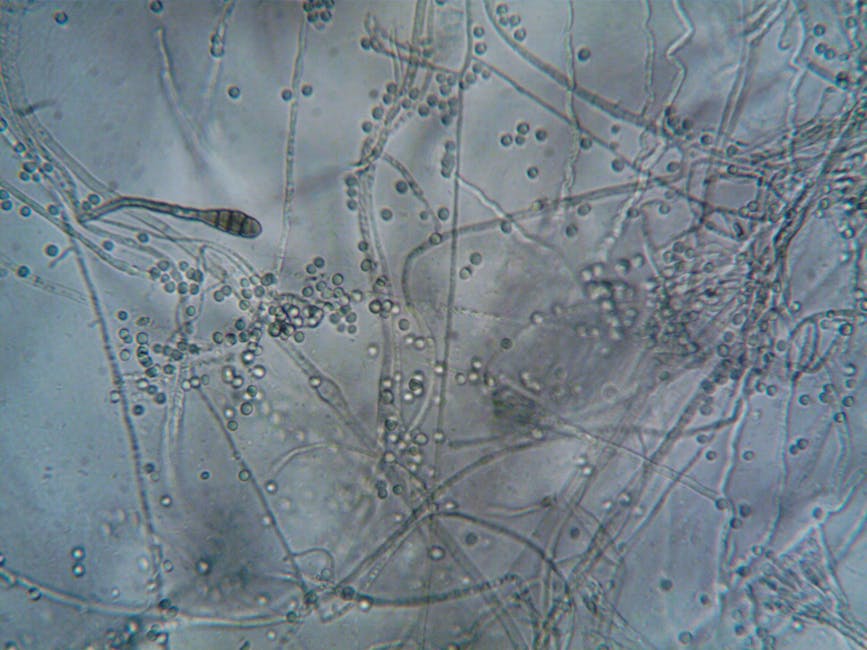
Researchers at the University of British Columbia (UBC) have found that vast underground mycorrhizal fungal networks significantly enhance a forest's resilience to drought, increasing survival rates by up to 50% in stressed conditions. The study monitored controlled forest plots, demonstrating that trees interconnected by these fungi exhibited better water uptake and nutrient transfer during dry spells compared to isolated trees. This was achieved through isotopic tracing of water and nutrients, revealing their movement through the fungal highways. This discovery highlights the critical role of these 'wood wide webs' in maintaining ecosystem stability. Published in *Nature Communications* in 2023.
Editorial check
How this page is checked
Source trail
Editorial source pending
External links are separated from Surfaced commentary.
Reader safety
Context before clicks
Product links and external services are not presented as guarantees.
Monetization
No affiliate flag
Ads and commerce links are kept distinct from editorial text.
Surfaced take
Why It’s Fascinating
This research deepens our understanding of how forests function as interconnected superorganisms, overturning the previous view of trees as largely independent entities competing for resources. Experts are particularly intrigued by the scale and efficiency of resource sharing, which could be a key to mitigating climate change impacts on forests. In the next 5-10 years, these findings could lead to rewilding and reforestation efforts that specifically prioritize inoculating saplings with diverse mycorrhizal fungi, rather than just planting trees. Imagine a forest floor as a hidden internet, where fungi act as fiber optic cables, allowing trees to share water, nutrients, and even warning signals. Forest managers, restoration ecologists, and climate change mitigation strategists will greatly benefit. How can we protect these vital subterranean networks from human disturbance, like soil compaction or chemical runoff, given their unseen importance?
Related

Snippyly
Snippyly, developed by a team focused on real-time collaboration, is a browser-based tool for capturing screenshots, recording screen videos, and sharing code…

Graphistry
Graphistry is a GPU-accelerated visual graph analytics platform that allows users to interactively visualize and explore massive networks and relationships in…
Enjoyed this? Get five picks like this every morning.
Free daily newsletter — zero spam, unsubscribe anytime.