Photo via Pexels
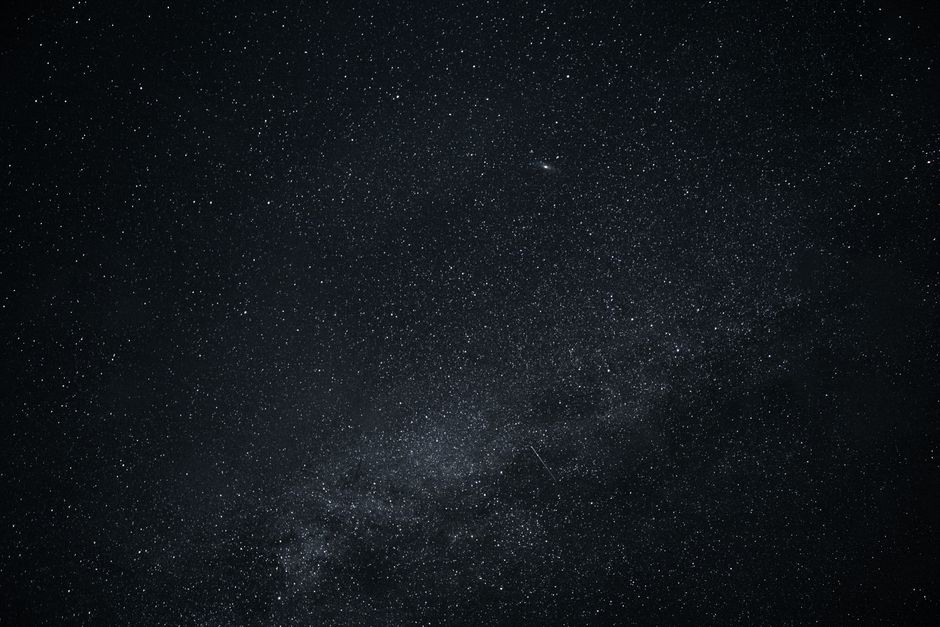
Neutron stars are the incredibly dense remnants left behind after the supernova explosion of massive stars. They are so compact that a sugar-cube-sized piece of neutron star material would weigh approximately 6 billion tons (roughly the mass of Mount Everest), while a single teaspoon would also weigh this immense amount. A typical neutron star packs the mass of 1.4 to 2.1 suns into a sphere only about 20 kilometers (12 miles) in diameter. Their existence was first theorized in the 1930s and later confirmed with the discovery of pulsars (rapidly rotating neutron stars emitting beams of radiation) in 1967 by Jocelyn Bell Burnell and Antony Hewish. These celestial bodies represent matter pushed to its absolute physical limits, where protons and electrons are crushed together into neutrons under unimaginable gravitational forces.
Editorial check
How this page is checked
Source trail
imagine.gsfc.nasa.gov
External links are separated from Surfaced commentary.
Reader safety
Context before clicks
Product links and external services are not presented as guarantees.
Monetization
No affiliate flag
Ads and commerce links are kept distinct from editorial text.
Surfaced take
Why It’s Fascinating
The extreme density and bizarre properties of neutron stars, such as their incredibly strong magnetic fields (up to a trillion times stronger than Earth's) and rapid rotation rates (up to 716 times per second), initially surprised physicists who had to develop new models of matter to explain them. They overturn conventional understandings of how matter behaves under extreme gravity, pushing the boundaries of nuclear physics and general relativity to their limits. Studying neutron stars provides a unique 'cosmic laboratory' for testing theories of quantum chromodynamics and the behavior of matter at ultra-high densities, potentially leading to breakthroughs in fundamental physics within 5-10 years that could inform our understanding of the early universe. Imagine taking every car, building, and person on Earth and compressing them into a single sugar cube – that's the kind of density we're talking about with a neutron star. Theoretical physicists, astrophysicists, and cosmologists are the primary beneficiaries, using neutron stars to probe the universe's most fundamental laws. What are the precise conditions under which a neutron star inevitably collapses into a black hole, and what fundamental laws of physics govern this ultimate transformation of matter?
Related

Kakehashi
Kakehashi is an experimental userspace environment designed to enable the execution of macOS binaries on Linux ARM systems. Developed by the wie-project, it…

Arc Browser
Arc Browser is a reimagined web browser built for a more organized and efficient online experience. It features a unique sidebar interface that keeps your…
Enjoyed this? Get five picks like this every morning.
Free daily newsletter — zero spam, unsubscribe anytime.