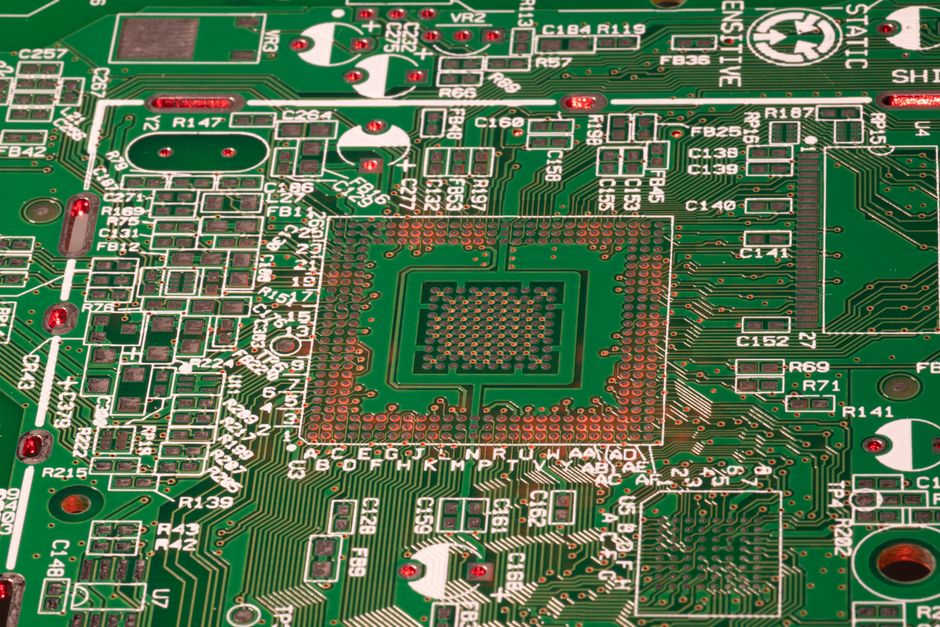
Photo via Pexels
Optical neuromorphic computing utilizes light waves, instead of electrical currents, to perform computations, leveraging the inherent parallelism and speed of photonics to mimic neural networks. Information is encoded in the amplitude, phase, or wavelength of light, processed through integrated photonic circuits containing modulators and detectors, and then transmitted at the speed of light. Research groups at MIT, IBM, and companies like Lightmatter and Luminous Computing are key players in this emerging field. These processors are currently in the advanced research and prototype stage, demonstrating computational capabilities for specific AI tasks. In March 2024, Lightmatter announced new benchmark results showing their photonic AI accelerator achieving peta-operations per second (PoPS) with significantly reduced energy consumption for deep learning inference, offering a radical departure from electron-based systems.
Editorial check
How this page is checked
Source trail
lightelligence.ai
External links are separated from Surfaced commentary.
Reader safety
Context before clicks
Product links and external services are not presented as guarantees.
Monetization
No affiliate flag
Ads and commerce links are kept distinct from editorial text.
Surfaced take
Why It Matters
The ever-increasing demand for AI compute power, particularly for large models, is pushing the limits of electronic processors, leading to escalating energy costs and latency, impacting the estimated $150 billion AI chip market. Optical neuromorphic chips promise orders of magnitude faster processing speeds and lower energy consumption for AI inference, enabling real-time, ultra-low-latency AI applications in fields like autonomous driving and high-frequency trading. Companies specializing in photonics and optoelectronics would see a massive boom, while traditional semiconductor manufacturers would face pressure to adapt their fabs. Key barriers include the complexity of fabricating dense photonic integrated circuits, efficient light-matter interaction at scale, and interfacing seamlessly with electronic components for input/output. Initial commercial products for data center acceleration could emerge within 8-15 years, with the US, Europe, and China as significant investors. A second-order effect could be the development of entirely new classes of algorithms optimized for photonic computation, potentially unlocking AI capabilities beyond current electronic paradigms.
Development Stage
Related

Commodore 64 released September 1, 1982
This in-depth article on dfarq.homeip.net provides a comprehensive exploration of the Commodore 64, the iconic home computer that launched on September 1…
Adobe Firefly
Adobe Firefly is a family of creative generative AI models designed to be safe for commercial use. It empowers users to generate images, text effects, and…
Enjoyed this? Get five picks like this every morning.
Free daily newsletter — zero spam, unsubscribe anytime.